IMG 0785
Related Company: B4 Newsdesk

Andy Burnham’s First 100 Days: The B4 Business Community Delivers Its Verdict

27th Oct 2026

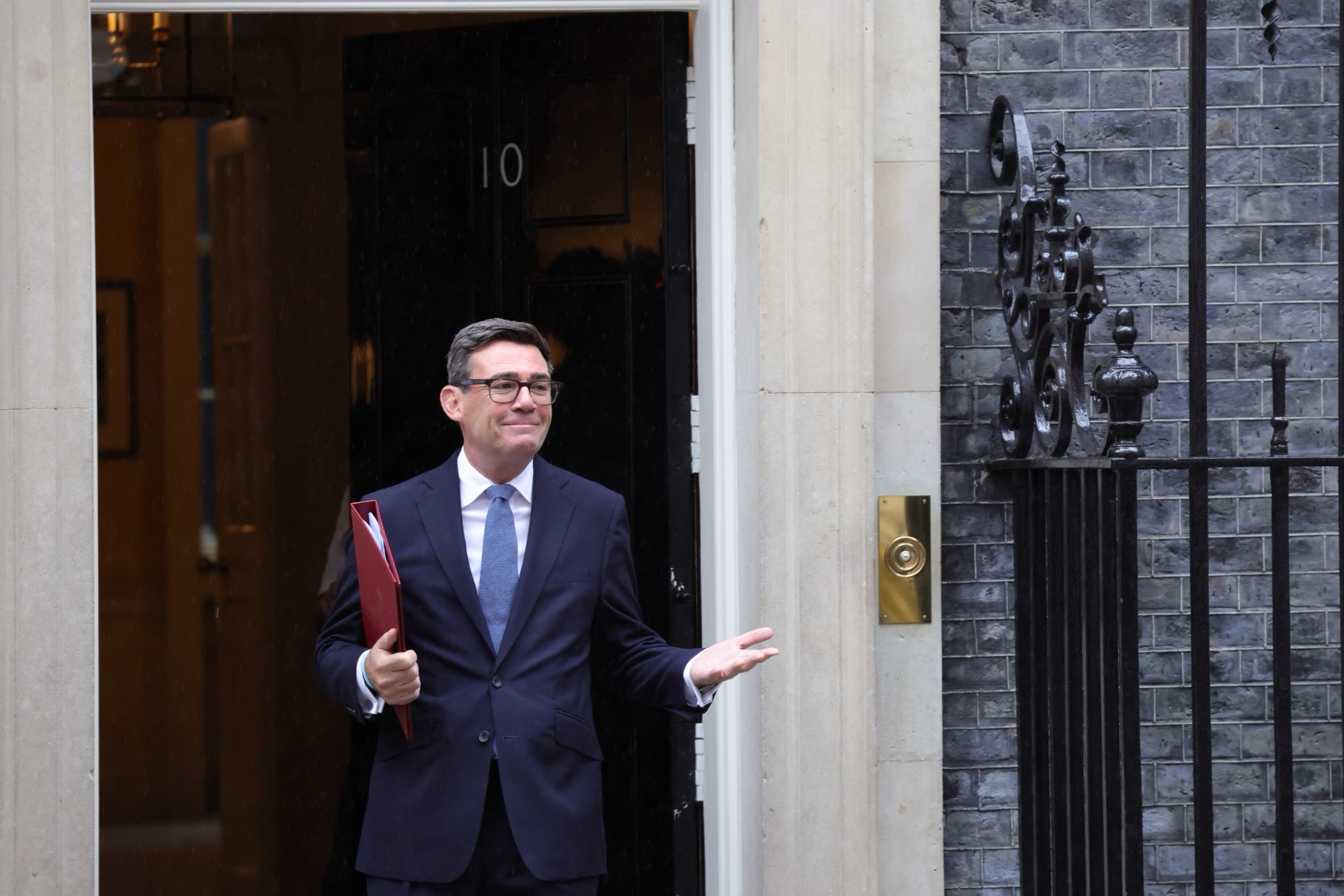
As Prime Minister Andy Burnham reaches 100 days in office today, B4 invited members of Oxfordshire’s business community to share their perspectives on his performance, priorities and the challenges ahead. The response reveals cautious optimism about the Government’s direction, tempered by concerns over employment costs, regional investment, public spending and the need to turn political ambition into meaningful economic progress.

One hundred days is hardly enough time to transform a country’s fortunes, particularly against a backdrop of economic uncertainty, pressure on public finances and challenges facing employers across almost every sector. Nevertheless, the opening months of any new administration provide an opportunity to establish priorities, communicate a vision and build confidence among businesses and the wider public.

For the B4 community, the early signs have been encouraging in several respects. But while contributors recognise a renewed emphasis on growth, regional empowerment and long-term thinking, they are united by a recurring message: the Government must now demonstrate how its ambitions will translate into practical results.

A More Positive Mood for Business?

For Philip Lewis, General Manager of The Randolph Hotel in Oxford, there has been a noticeable improvement in the atmosphere surrounding business and economic growth. “Overall, I think the Prime Minister has started well. In particular, the mood around business and growth feels noticeably more positive than it did at the start of the year.”

However, Philip’s optimism comes with a significant concern about the employment prospects of younger generations. “My biggest concern is the million or so young people now classed as NEET (not in education, employment or training). That worries me personally, as a parent of two young children, but also as someone who employs a lot of young people.”

The hospitality sector has been particularly exposed to increasing employment costs, and Philip highlights the consequences for recruitment. “In hospitality we’ve seen first-hand the knock-on effect that rising wage costs and employer National Insurance have had on hiring.”

Looking ahead to the Budget, Philip hopes the Government will prioritise stability over political headlines. “I’m looking forward to the Budget and hope it brings stability rather than headline-grabbing gimmicks.”

His comments underline an important challenge: how can the Government stimulate employment, particularly among younger people, while ensuring businesses have the confidence and financial capacity to recruit?

A Clearer Vision, But What About Oxfordshire?

Peter McLintock, Business Development Ambassador for Mills & Reeve LLP, believes the Prime Minister has established a more coherent sense of direction. “Andy Burnham has made a promising start. In stark contrast to his predecessor, he has set out a clear vision around devolution, housing, public service reform and economic renewal.”

Peter welcomes the emphasis on empowering regions and rebuilding trust in government, particularly from the perspective of businesses operating outside London.

However, he raises an issue of particular relevance to Oxfordshire’s business community: the future of the Oxford–Cambridge growth corridor.

“I have not heard anything from him about commitment to the Ox-Cam corridor, which slightly concerns me that No 10 North and his beloved northern growth corridor will take precedence over our region.”

With Oxfordshire’s strengths in science, technology, advanced manufacturing and innovation, the question of where national investment is directed will be closely watched. Peter also recognises that many of the Government’s commitments will take years to deliver.

“The real test will be whether businesses and communities see tangible improvements in productivity, investment, skills and living standards over the coming years.

“The ambition is apparent; sustained execution will now be key.”

A Ten-Year Vision Needs an 18-Month Flight Plan

Mark Zwinderman draws on one of history’s most ambitious achievements to illustrate what he believes the Government must do next. “Kennedy did not commit to go to the Moon because it was easy. He said it was hard, and then showed the steps and how it would mobilise the national resources and energy of the American people and industry.”

For Mark, the Prime Minister’s decision to establish a longer-term horizon represents a welcome departure from years of political uncertainty. “Andy Burnham made a strong start by resetting the horizon to ten years, a welcome change after a decade of short-term turnover and lack of vision.”

But establishing an ambition is only the beginning. “Now this vision needs a flight plan. Businesses invest when they can see the first missions.”

Mark argues that the Government must provide greater clarity about what can realistically be achieved in the next 18 months, which regions and industries will lead the way, and how success will be measured. “Publish that map, invite business onto the crew, and confidence will follow.”

The Budget: A Defining Test

For Peter Swanson, Chair of Intertronics, the most significant assessment of the Government’s economic direction is still to come. “I think the real test of Andy Burnham’s government is still to come, with the Budget on 28 October.”

Peter points to the difficult choices facing ministers as they balance competing demands on public spending with the need to stimulate sustainable economic growth.

“The country faces serious structural challenges, and sustainable economic growth must be central to addressing them.”

He believes welfare reform must form part of the Government’s approach, both to manage expenditure and to support more people into employment. “Our welfare system is clearly in need of fundamental reform, both to control costs and to help more people into work.”

With defence and other priorities placing additional pressure on public finances, Peter argues that difficult spending decisions cannot be avoided. “I would much rather see a serious commitment to reform, fiscal discipline and encouraging business investment than further tax increases.”

His contribution reflects a broader concern among employers: that economic growth requires not only confidence and ambition, but also a sustainable fiscal framework that encourages private-sector investment.

Supporting Employees and Employers Must Go Hand in Hand

Samantha Newton FCIPD, Founder and Managing Director of B4 Member Magenta HR Consulting, brings the perspective of smaller and owner-managed businesses to the discussion. “Andy Burnham’s early focus on growth is encouraging, but business confidence will ultimately be measured by results, not announcements.”

Samantha works closely with employers navigating increasingly complex employment obligations, and believes the practical realities of running a business must be reflected in government policy.

“Working closely with owner-managed businesses, I see how employment costs, changing legislation and the fear of getting difficult people decisions wrong can affect recruitment and investment.”

While supporting fair treatment and appropriate protections for employees, Samantha believes policymakers must also understand the pressures facing business owners.

“Small employers want to treat their people fairly, but they also need clear, practical rules and confidence that they can manage problems without disproportionate cost or risk.” Her message to ministers is straightforward. “Protecting employees and supporting employers must go hand in hand. Get that balance right, and small businesses can thrive.”

It is a particularly relevant point for Oxfordshire, where small and medium-sized businesses play a vital role in employment, innovation and the wider local economy.

Results, Not Rhetoric, Will Define Success

John Hoy, Owner of Hoy Consultancy, acknowledges the scale of the challenge facing any Prime Minister. “Not many of us would choose to step into No 10 as Prime Minister – not the easiest gig – so it is reasonable to say that Andy Burnham has made a steady start across his first 100 days.”

John recognises the Government’s emphasis on the cost of living, regional devolution and rebuilding public confidence as a change of direction. But he questions whether the ambitions can be delivered within the country’s financial constraints.

“Ambitious promises must translate into tangible improvements in living standards, public services and economic growth to be meaningful – but is this possible within such tight financial constraints?”

John also raises the importance of democratic legitimacy and accountability. “His legitimacy rests solely on parliamentary democracy. Ultimately, results, not rhetoric, will define his success, his legacy and his future.”

It is a fitting conclusion to a discussion in which contributors repeatedly distinguish between the promise of a new administration and the measurable outcomes that will ultimately determine its record.

The B4 Perspective: Cautious Optimism, Clear Expectations

Across these six contributions, several consistent themes emerge.

There is an appetite for a Government that thinks beyond the next political cycle, provides a clearer sense of direction and recognises the economic potential of regions outside London.

There is also a strong desire for practical measures that support recruitment, investment and business confidence, particularly among smaller employers facing rising costs and regulatory pressures.

The future of the Oxford–Cambridge corridor, the challenge of youth unemployment, the balance between employment protection and employer confidence, and the difficult choices surrounding public expenditure all feature prominently.

Perhaps most significantly, there is a shared recognition that government and business must work together.

The B4 community’s message is not simply that the Prime Minister must deliver. It is that businesses need clarity, stability and the opportunity to contribute to that delivery.

As the Government moves beyond its opening 100 days, tomorrow’s Budget and the practical implementation of its longer-term ambitions will provide important opportunities to assess progress.

For Oxfordshire’s business community, the questions are clear: Will investment reach the regions where it can make the greatest difference? Will employers feel confident enough to recruit and expand? Will young people have better opportunities? And will the promise of economic renewal become visible in businesses and communities across the country?

One hundred days may be enough to establish a direction. The years ahead will determine whether that direction produces lasting change.

___________________________________________________________________


B4 Asks brings together perspectives from across the B4 business community, encouraging constructive discussion of the issues affecting businesses, organisations and the wider economy. The views expressed are those of the individual contributors and do not necessarily represent the position of B4.

Back to news

Andy Burnham’s First 100 Days: The B4 Business Community Delivers Its Verdict

27th Oct 2026
IMG 0785
Related Company: B4 Newsdesk

As Prime Minister Andy Burnham reaches 100 days in office today, B4 invited members of Oxfordshire’s business community to share their perspectives on his performance, priorities and the challenges ahead. The response reveals cautious optimism about the Government’s direction, tempered by concerns over employment costs, regional investment, public spending and the need to turn political ambition into meaningful economic progress.

One hundred days is hardly enough time to transform a country’s fortunes, particularly against a backdrop of economic uncertainty, pressure on public finances and challenges facing employers across almost every sector. Nevertheless, the opening months of any new administration provide an opportunity to establish priorities, communicate a vision and build confidence among businesses and the wider public.

For the B4 community, the early signs have been encouraging in several respects. But while contributors recognise a renewed emphasis on growth, regional empowerment and long-term thinking, they are united by a recurring message: the Government must now demonstrate how its ambitions will translate into practical results.

A More Positive Mood for Business?

For Philip Lewis, General Manager of The Randolph Hotel in Oxford, there has been a noticeable improvement in the atmosphere surrounding business and economic growth. “Overall, I think the Prime Minister has started well. In particular, the mood around business and growth feels noticeably more positive than it did at the start of the year.”

However, Philip’s optimism comes with a significant concern about the employment prospects of younger generations. “My biggest concern is the million or so young people now classed as NEET (not in education, employment or training). That worries me personally, as a parent of two young children, but also as someone who employs a lot of young people.”

The hospitality sector has been particularly exposed to increasing employment costs, and Philip highlights the consequences for recruitment. “In hospitality we’ve seen first-hand the knock-on effect that rising wage costs and employer National Insurance have had on hiring.”

Looking ahead to the Budget, Philip hopes the Government will prioritise stability over political headlines. “I’m looking forward to the Budget and hope it brings stability rather than headline-grabbing gimmicks.”

His comments underline an important challenge: how can the Government stimulate employment, particularly among younger people, while ensuring businesses have the confidence and financial capacity to recruit?

A Clearer Vision, But What About Oxfordshire?

Peter McLintock, Business Development Ambassador for Mills & Reeve LLP, believes the Prime Minister has established a more coherent sense of direction. “Andy Burnham has made a promising start. In stark contrast to his predecessor, he has set out a clear vision around devolution, housing, public service reform and economic renewal.”

Peter welcomes the emphasis on empowering regions and rebuilding trust in government, particularly from the perspective of businesses operating outside London.

However, he raises an issue of particular relevance to Oxfordshire’s business community: the future of the Oxford–Cambridge growth corridor.

“I have not heard anything from him about commitment to the Ox-Cam corridor, which slightly concerns me that No 10 North and his beloved northern growth corridor will take precedence over our region.”

With Oxfordshire’s strengths in science, technology, advanced manufacturing and innovation, the question of where national investment is directed will be closely watched. Peter also recognises that many of the Government’s commitments will take years to deliver.

“The real test will be whether businesses and communities see tangible improvements in productivity, investment, skills and living standards over the coming years.

“The ambition is apparent; sustained execution will now be key.”

A Ten-Year Vision Needs an 18-Month Flight Plan

Mark Zwinderman draws on one of history’s most ambitious achievements to illustrate what he believes the Government must do next. “Kennedy did not commit to go to the Moon because it was easy. He said it was hard, and then showed the steps and how it would mobilise the national resources and energy of the American people and industry.”

For Mark, the Prime Minister’s decision to establish a longer-term horizon represents a welcome departure from years of political uncertainty. “Andy Burnham made a strong start by resetting the horizon to ten years, a welcome change after a decade of short-term turnover and lack of vision.”

But establishing an ambition is only the beginning. “Now this vision needs a flight plan. Businesses invest when they can see the first missions.”

Mark argues that the Government must provide greater clarity about what can realistically be achieved in the next 18 months, which regions and industries will lead the way, and how success will be measured. “Publish that map, invite business onto the crew, and confidence will follow.”

The Budget: A Defining Test

For Peter Swanson, Chair of Intertronics, the most significant assessment of the Government’s economic direction is still to come. “I think the real test of Andy Burnham’s government is still to come, with the Budget on 28 October.”

Peter points to the difficult choices facing ministers as they balance competing demands on public spending with the need to stimulate sustainable economic growth.

“The country faces serious structural challenges, and sustainable economic growth must be central to addressing them.”

He believes welfare reform must form part of the Government’s approach, both to manage expenditure and to support more people into employment. “Our welfare system is clearly in need of fundamental reform, both to control costs and to help more people into work.”

With defence and other priorities placing additional pressure on public finances, Peter argues that difficult spending decisions cannot be avoided. “I would much rather see a serious commitment to reform, fiscal discipline and encouraging business investment than further tax increases.”

His contribution reflects a broader concern among employers: that economic growth requires not only confidence and ambition, but also a sustainable fiscal framework that encourages private-sector investment.

Supporting Employees and Employers Must Go Hand in Hand

Samantha Newton FCIPD, Founder and Managing Director of B4 Member Magenta HR Consulting, brings the perspective of smaller and owner-managed businesses to the discussion. “Andy Burnham’s early focus on growth is encouraging, but business confidence will ultimately be measured by results, not announcements.”

Samantha works closely with employers navigating increasingly complex employment obligations, and believes the practical realities of running a business must be reflected in government policy.

“Working closely with owner-managed businesses, I see how employment costs, changing legislation and the fear of getting difficult people decisions wrong can affect recruitment and investment.”

While supporting fair treatment and appropriate protections for employees, Samantha believes policymakers must also understand the pressures facing business owners.

“Small employers want to treat their people fairly, but they also need clear, practical rules and confidence that they can manage problems without disproportionate cost or risk.” Her message to ministers is straightforward. “Protecting employees and supporting employers must go hand in hand. Get that balance right, and small businesses can thrive.”

It is a particularly relevant point for Oxfordshire, where small and medium-sized businesses play a vital role in employment, innovation and the wider local economy.

Results, Not Rhetoric, Will Define Success

John Hoy, Owner of Hoy Consultancy, acknowledges the scale of the challenge facing any Prime Minister. “Not many of us would choose to step into No 10 as Prime Minister – not the easiest gig – so it is reasonable to say that Andy Burnham has made a steady start across his first 100 days.”

John recognises the Government’s emphasis on the cost of living, regional devolution and rebuilding public confidence as a change of direction. But he questions whether the ambitions can be delivered within the country’s financial constraints.

“Ambitious promises must translate into tangible improvements in living standards, public services and economic growth to be meaningful – but is this possible within such tight financial constraints?”

John also raises the importance of democratic legitimacy and accountability. “His legitimacy rests solely on parliamentary democracy. Ultimately, results, not rhetoric, will define his success, his legacy and his future.”

It is a fitting conclusion to a discussion in which contributors repeatedly distinguish between the promise of a new administration and the measurable outcomes that will ultimately determine its record.

The B4 Perspective: Cautious Optimism, Clear Expectations

Across these six contributions, several consistent themes emerge.

There is an appetite for a Government that thinks beyond the next political cycle, provides a clearer sense of direction and recognises the economic potential of regions outside London.

There is also a strong desire for practical measures that support recruitment, investment and business confidence, particularly among smaller employers facing rising costs and regulatory pressures.

The future of the Oxford–Cambridge corridor, the challenge of youth unemployment, the balance between employment protection and employer confidence, and the difficult choices surrounding public expenditure all feature prominently.

Perhaps most significantly, there is a shared recognition that government and business must work together.

The B4 community’s message is not simply that the Prime Minister must deliver. It is that businesses need clarity, stability and the opportunity to contribute to that delivery.

As the Government moves beyond its opening 100 days, tomorrow’s Budget and the practical implementation of its longer-term ambitions will provide important opportunities to assess progress.

For Oxfordshire’s business community, the questions are clear: Will investment reach the regions where it can make the greatest difference? Will employers feel confident enough to recruit and expand? Will young people have better opportunities? And will the promise of economic renewal become visible in businesses and communities across the country?

One hundred days may be enough to establish a direction. The years ahead will determine whether that direction produces lasting change.

___________________________________________________________________


B4 Asks brings together perspectives from across the B4 business community, encouraging constructive discussion of the issues affecting businesses, organisations and the wider economy. The views expressed are those of the individual contributors and do not necessarily represent the position of B4.

Back to news