Bridging the Divide: Michael Gove Joins Price Bailey to Explore the Challenges Facing Business and Government
Related Company: Price Bailey LLP

Bridging the Divide: Michael Gove Joins Price Bailey to Explore the Challenges Facing Business and Government

6th Oct 2026

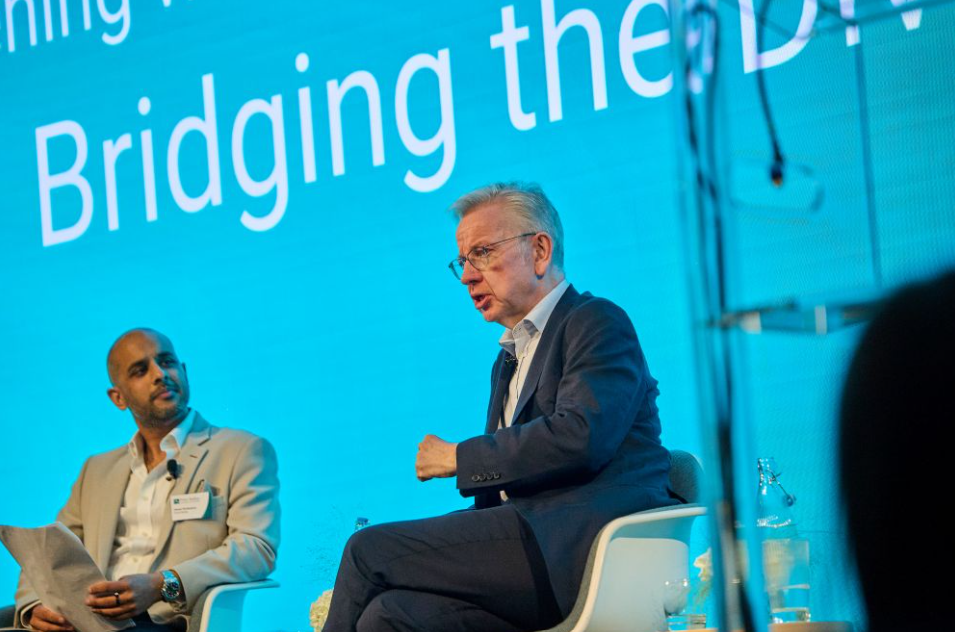
Around 400 clients, referrers and professional contacts joined Price Bailey at the IET in London on 30 September 2026 for Bridging the Divide, an evening exploring the relationship between business and government and the challenges facing the UK economy.

The event centred around Price Bailey’s latest thought leadership report, the MPs and Business Leaders Survey 2026, which compares the views of more than 100 MPs and more than 500 business leaders on taxation, business support and the economic outlook.

Former Cabinet minister Lord Michael Gove was the evening’s guest speaker, joining Price Bailey Chairman Chand Chudasama for a wide-ranging conversation covering economic growth, tax, regulation, energy costs, food security, artificial intelligence and the way decisions are made within government.

Where MPs and business leaders agree – and where they differ

Opening the evening, Price Bailey Managing Director Martin Clapson shared the report’s headline findings.

While MPs and business leaders broadly agree on the importance of skills, infrastructure and economic growth, the survey highlights significant differences between the two groups when it comes to taxation and commercial priorities.

Martin also outlined three trends Price Bailey is increasingly seeing among its clients:

  • Businesses are growing more slowly than in previous years.
  • Business owners are becoming more cautious and selective, with a greater focus on productivity.
  • Skills shortages, regulation, taxation and the difficulty of planning with confidence remain among the most common frustrations.

These findings provided the backdrop for the conversation with Gove, who offered his own perspective on how government could better support growth.

The case for tax reform

Gove argued that the Treasury’s focus on controlling costs can make it reluctant to support spending in the present even where investment could generate savings or returns in the longer term.

He suggested that a stronger institution focused specifically on economic growth could provide a counterbalance to the Treasury’s approach.

Discussing tax policy with Chand, Gove also argued that a high tax burden can discourage the entrepreneurs, investors and job creators who contribute to economic growth.

As he put it, policy should “make successful people comfortable taking risks and investing in the UK economy.”

Regulation and the cost of doing business

Regulation and energy costs were another key theme.

While Gove expressed support for protections for workers and the environment, he questioned whether some regulatory schemes can place too much emphasis on process rather than outcomes.

He highlighted fish protection requirements associated with Hinkley Point C on the Severn Estuary, which he said had resulted in costs of more than £700 million.

Gove identified high industrial energy prices, increased hiring costs and regulatory uncertainty as some of the biggest constraints currently facing businesses.

Farming, food security and Inheritance Tax

The conversation also turned to farming and food production.

Gove acknowledged that no country can produce everything it consumes, but argued that domestic food production should nevertheless be viewed as an issue of national security.

Discussing changes to Inheritance Tax affecting farmers, he stressed the importance of understanding the consequences of major policy changes and ensuring that funding commitments are honoured as farms transition.

AI and the next generation

Artificial intelligence was another major topic, with Gove predicting that AI will have a significant impact on white-collar employment.

He highlighted the potential implications for graduate roles, traditionally seen as an important first step into professional careers, and argued that both AI and defence currently lack sufficient political leadership.

The discussion also touched on the financial pressures facing younger generations, including student debt and high property costs, particularly when compared with older generations who have benefited from significant increases in asset values.

Bridging the divide

The evening highlighted the importance of continued dialogue between business leaders and policymakers at a time when businesses are navigating slower growth, rising costs, skills shortages and an increasingly uncertain regulatory environment.

Price Bailey’s MPs and Business Leaders Survey 2026 provides a snapshot of where politicians and businesses see the challenges differently – while the discussion with Gove offered a perspective on how some of those divides might be addressed.

For businesses, the message was clear: creating the conditions for long-term growth will require greater confidence, effective investment, proportionate regulation and policies that encourage businesses and entrepreneurs to take risks.

Read the full MPs and Business Leaders Survey 2026 from Price Bailey.

Become a B4 member 

Back to news

Bridging the Divide: Michael Gove Joins Price Bailey to Explore the Challenges Facing Business and Government

6th Oct 2026
Bridging the Divide: Michael Gove Joins Price Bailey to Explore the Challenges Facing Business and Government
Related Company: Price Bailey LLP

Around 400 clients, referrers and professional contacts joined Price Bailey at the IET in London on 30 September 2026 for Bridging the Divide, an evening exploring the relationship between business and government and the challenges facing the UK economy.

The event centred around Price Bailey’s latest thought leadership report, the MPs and Business Leaders Survey 2026, which compares the views of more than 100 MPs and more than 500 business leaders on taxation, business support and the economic outlook.

Former Cabinet minister Lord Michael Gove was the evening’s guest speaker, joining Price Bailey Chairman Chand Chudasama for a wide-ranging conversation covering economic growth, tax, regulation, energy costs, food security, artificial intelligence and the way decisions are made within government.

Where MPs and business leaders agree – and where they differ

Opening the evening, Price Bailey Managing Director Martin Clapson shared the report’s headline findings.

While MPs and business leaders broadly agree on the importance of skills, infrastructure and economic growth, the survey highlights significant differences between the two groups when it comes to taxation and commercial priorities.

Martin also outlined three trends Price Bailey is increasingly seeing among its clients:

  • Businesses are growing more slowly than in previous years.
  • Business owners are becoming more cautious and selective, with a greater focus on productivity.
  • Skills shortages, regulation, taxation and the difficulty of planning with confidence remain among the most common frustrations.

These findings provided the backdrop for the conversation with Gove, who offered his own perspective on how government could better support growth.

The case for tax reform

Gove argued that the Treasury’s focus on controlling costs can make it reluctant to support spending in the present even where investment could generate savings or returns in the longer term.

He suggested that a stronger institution focused specifically on economic growth could provide a counterbalance to the Treasury’s approach.

Discussing tax policy with Chand, Gove also argued that a high tax burden can discourage the entrepreneurs, investors and job creators who contribute to economic growth.

As he put it, policy should “make successful people comfortable taking risks and investing in the UK economy.”

Regulation and the cost of doing business

Regulation and energy costs were another key theme.

While Gove expressed support for protections for workers and the environment, he questioned whether some regulatory schemes can place too much emphasis on process rather than outcomes.

He highlighted fish protection requirements associated with Hinkley Point C on the Severn Estuary, which he said had resulted in costs of more than £700 million.

Gove identified high industrial energy prices, increased hiring costs and regulatory uncertainty as some of the biggest constraints currently facing businesses.

Farming, food security and Inheritance Tax

The conversation also turned to farming and food production.

Gove acknowledged that no country can produce everything it consumes, but argued that domestic food production should nevertheless be viewed as an issue of national security.

Discussing changes to Inheritance Tax affecting farmers, he stressed the importance of understanding the consequences of major policy changes and ensuring that funding commitments are honoured as farms transition.

AI and the next generation

Artificial intelligence was another major topic, with Gove predicting that AI will have a significant impact on white-collar employment.

He highlighted the potential implications for graduate roles, traditionally seen as an important first step into professional careers, and argued that both AI and defence currently lack sufficient political leadership.

The discussion also touched on the financial pressures facing younger generations, including student debt and high property costs, particularly when compared with older generations who have benefited from significant increases in asset values.

Bridging the divide

The evening highlighted the importance of continued dialogue between business leaders and policymakers at a time when businesses are navigating slower growth, rising costs, skills shortages and an increasingly uncertain regulatory environment.

Price Bailey’s MPs and Business Leaders Survey 2026 provides a snapshot of where politicians and businesses see the challenges differently – while the discussion with Gove offered a perspective on how some of those divides might be addressed.

For businesses, the message was clear: creating the conditions for long-term growth will require greater confidence, effective investment, proportionate regulation and policies that encourage businesses and entrepreneurs to take risks.

Read the full MPs and Business Leaders Survey 2026 from Price Bailey.

Become a B4 member 

Back to news