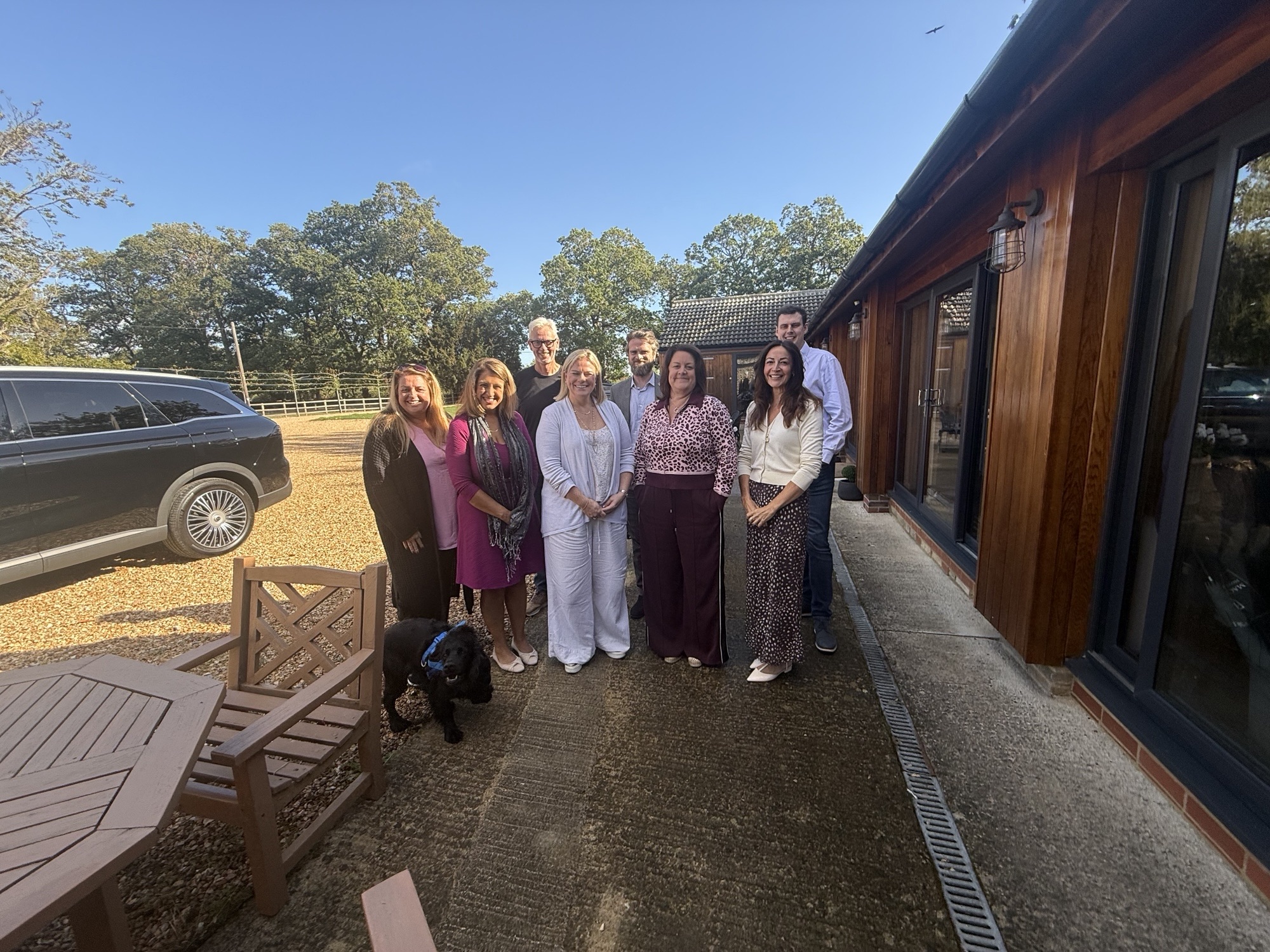
The latest B4 BDM Ecosystem brought business development professionals together for a highly interactive session led by Caroline O’Connor, exploring two increasingly important questions: how can AI help us market more intelligently, and when is the right moment to ask someone for an introduction?
As Caroline made clear from the outset, the BDM Ecosystem is designed as a peer-learning environment rather than a traditional presentation. With professionals from hospitality, charities, professional services, education, recruitment and transport around the table, there was plenty of experience to draw upon.
And the challenges were equally varied: growing unrestricted charity income, expanding into new markets, developing younger professionals’ networks, finding new customers, improving outreach and simply maintaining growth after a record year.
AI should make marketing smarter – not simply create more content
The first half of the session focused on the changing marketing landscape and the impact of AI. Caroline challenged the group to move beyond using AI simply to produce more copy and content. The greater opportunity is using it to understand audiences better, analyse performance more quickly and continuously test and refine campaigns. Rather than planning a campaign, running it for three months and reviewing the results afterwards, businesses can increasingly work in shorter sprints: create several executions, test them, understand what is working and adapt quickly.
The discussion highlighted how organisations around the table are already doing this in different ways. AI is being used to help create and test advertising creative, analyse campaign results, develop event programmes from historic data and feedback, support fundraising proposals and build more personalised working tools and agents. One participant described using AI to bring together previous event feedback, attendance, opportunities generated and anticipated market trends to help develop a future events programme – work that previously could have taken weeks. But there was an important qualification.
AI doesn’t replace the conversation.
The technology can accelerate analysis and bring together huge amounts of information, but understanding what customers, supporters and clients genuinely value still requires human interaction, judgement and critical thinking. That led to another important theme: businesses shouldn’t assume they know why customers choose them. Talking to existing customers and understanding the real value they receive can provide far more powerful marketing messages than those created solely from inside the organisation.
From quarterly campaigns to shorter sprints
Caroline encouraged attendees to reconsider the traditional campaign model. If AI makes content creation, analysis and testing faster, why wait three months to discover whether something worked? Instead, organisations can create several versions of a message, measure the response and quickly concentrate their efforts on the content that resonates most strongly. The challenge is not simply producing more. It is becoming more relevant.
Who exactly are we speaking to? What is happening in their world today? Why is our proposition relevant to them now? What can we genuinely offer that somebody else cannot easily replicate? In an increasingly crowded communications environment, relevance is becoming one of the most powerful ways to cut through.
The magic moment to ask
The second half brought the conversation firmly back to business development and relationships. When is the best time to ask somebody for a referral or introduction?
Caroline’s answer was beautifully simple: When they’re thanking you.
At that moment, somebody has recognised the value you’ve created. Perhaps you’ve completed an excellent piece of work, solved a problem, made a useful introduction or provided a memorable experience. Rather than forcing an uncomfortable sales conversation, that can be the natural moment to say: if you know somebody else who might benefit from what we do, I’d really welcome an introduction. The word “referral” itself prompted plenty of debate. For some, it sounded too transactional or too closely associated with an immediate sale. But introductions are different.
Business development might mean asking someone to introduce you to a potential customer, recommend a future speaker, bring someone to an event or simply connect you with somebody worth knowing. The principle is the same: relationships create opportunities.
Give first
Perhaps the strongest theme of the session was generosity. Caroline described herself as a “collector of voices and IOUs” – someone who instinctively gives first, makes connections and creates value for others without keeping a transactional scorecard. It was a philosophy echoed strongly around the room.
Great business development isn’t necessarily about making the immediate sale. It is about joining dots, making useful introductions, helping people even when there is no obvious benefit to you and investing in relationships for the long term. As the discussion developed, the distinction became increasingly clear: business development isn’t simply sales.
It is about understanding who needs what and when – and being sufficiently connected and trusted to help make it happen.
Making the subconscious conscious
For experienced networkers and business development professionals, much of this already happens naturally. We introduce people. We recommend businesses. We invite people to events. We share contacts. We help solve problems. Caroline’s challenge was to become slightly more conscious about it.
Are we making enough introductions? Are we asking for introductions ourselves? Has a difficult market or a run of “no’s” affected our confidence? Could we make one more ask this month than we normally would? Small changes can have a significant cumulative effect on a pipeline.
The session finished with everyone identifying something they would take away – from bringing marketing and business development teams closer together, to setting quarterly goals, becoming more deliberate about introductions and simply having the confidence to ask at the right moment.
Thank you, Caroline
Sadly, this was our final BDM Ecosystem led by Caroline O’Connor.
Caroline has been an incredible supporter of B4 and, over the past three years, has played an integral role in helping us establish and develop the Ecosystem format. Her energy, experience, generosity and ability to create open, valuable conversations have made an enormous contribution – not only to the BDM Ecosystem, but to B4 more widely.
We are hugely indebted to Caroline for everything she has contributed and for the support she continues to give B4. As one of our longest-standing members, and a long-term friend and supporter of the B4 community, Caroline will always be very welcome at B4 events – and we’re certainly hoping we can persuade her back for the occasional guest speaker appearance.
For now, a huge thank you, Caroline, from all of us at B4 and we wish you continued success with Fourth Born and Opendoorz.