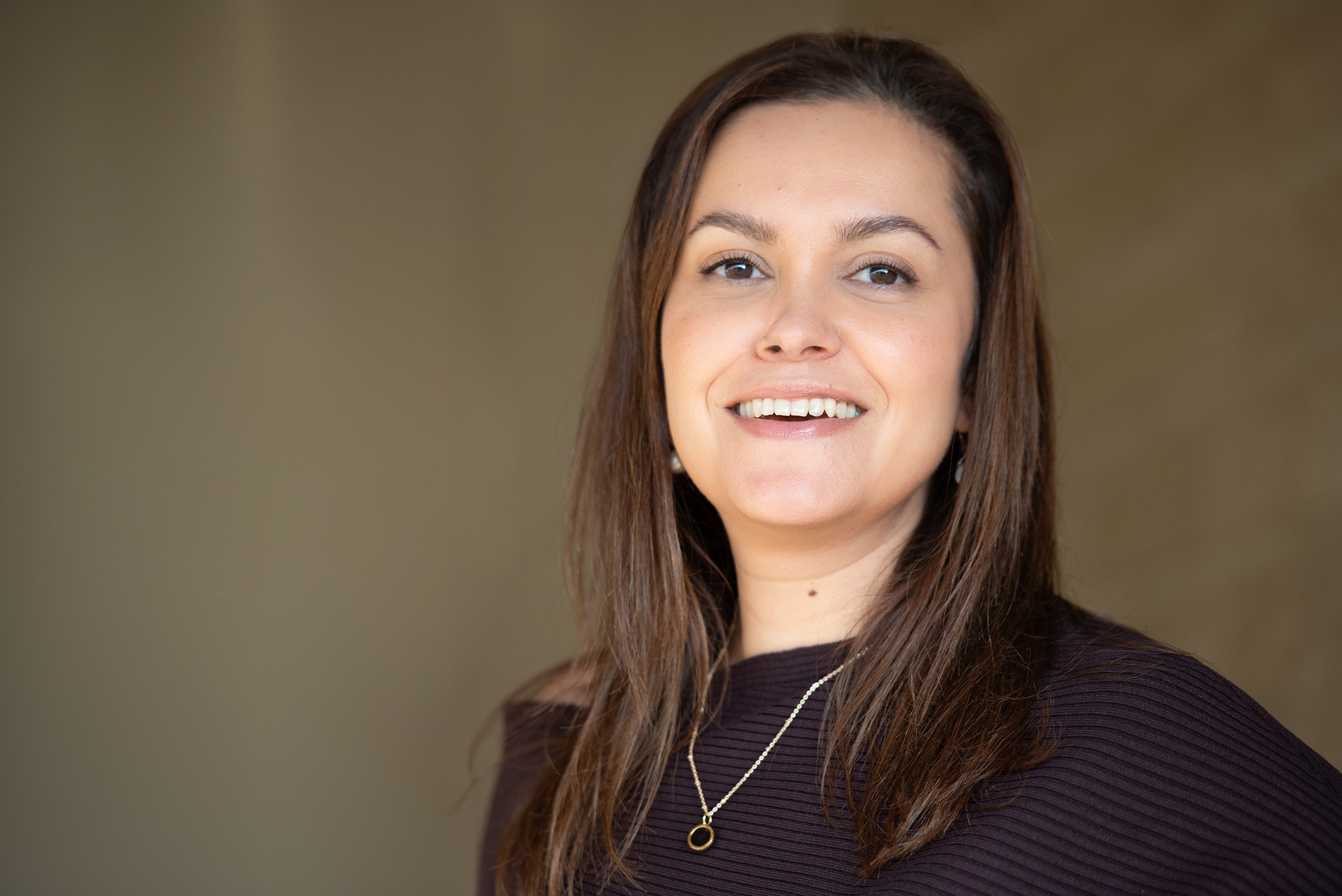
What happens when you combine a PhD in biomedical sciences, years of corporate experience, an understanding of behaviour change and a fascination with what makes people tick? For B4 Member Dr Emma Georgiou, the result is an approach to leadership and organisational development that goes far beyond traditional coaching.
Spend time talking to Emma Georgiou and one thing becomes apparent: describing her simply as an executive coach doesn’t tell the whole story. Coaching is certainly part of her work, but so are leadership development, training, workshop facilitation and consultancy. She works with leaders and HR teams to understand what’s happening within their organisations, identify underlying challenges and implement practical change.
Emma’s background is rather different from that of many leadership coaches. With a PhD in biomedical sciences, she began her career in biotechnology before moving into healthcare communications and eventually running her own not-for-profit health policy consultancy. It was a career grounded in evidence, education and understanding how behaviour changes — principles she continues to apply today.
“My background isn’t coaching, it’s science,” Emma explains. “A lot of the tools I learned around education and making behaviour change happen using evidence-based approaches are things I bring into my work now. It makes it more grounded and gives us measures we can use so people can actually see a difference at the end of a programme.”
For Emma, this is particularly important because coaching and training can sometimes be perceived as ‘fluffy’. An organisation commissions a programme, everyone leaves feeling energised, but little changes afterwards. Her preference is to establish clear objectives, introduce qualitative and quantitative measures where appropriate and continually adapt the work to achieve meaningful, lasting results.
People Are People
Emma has worked with everyone from senior executives to middle managers across organisations including Red Bull, Haas, Edelman, Aberdeen Investments, MSCI and WSP. While their industries differ considerably, she finds that the underlying human challenges are remarkably consistent.
“People tend to experience the same challenges, the same feelings and the same behaviours wherever they are. They’re just operating within a different system.”
That observation feels especially relevant in today’s workplace. Since COVID, organisations have experienced extraordinary change. Working practices have evolved, technology continues to accelerate and AI presents another challenge for leaders attempting to understand how it should be introduced. Emma sees particular pressure building around middle management, where responsibility for implementing change often lands on people already managing upwards and downwards, navigating imperfect systems and juggling competing demands.
“We’re trying to do all the shiny new technology, data, systems and processes, but you need to take people on that journey with you. If you don’t, it’s never going to work anyway.”
It’s part of a wider phenomenon Emma describes as change fatigue. Businesses cannot simply add another priority to an already full workload and expect successful transformation. Leaders must also consider what can be removed, where additional support is required and how to create the capacity for people to embrace something new.
Reconnecting People with Themselves
Emma’s approach frequently begins with something more fundamental than targets, restructures or organisational strategy: helping people understand themselves. Who am I? What matters to me? How do I want to work? What am I trying to achieve? She believes reconnecting with these questions enables individuals to navigate change more effectively.
Her own career illustrates the point. Having invested years in science, Emma initially felt she ought to remain on that path. Working with a coach helped her challenge that assumption and recognise that leaving the laboratory didn’t mean abandoning her expertise. The analytical thinking, evidence-based approach and understanding of human behaviour all came with her.
“We all have these filters,” she explains. “Every experience you’ve had — good, bad or ugly — shapes how you see the world. If you can help someone shine a light on their thinking so they can see something differently themselves, or see a new path or outcome, I think that’s brilliant.”
What Makes a Good Leader?
Asked to identify three essential leadership characteristics, Emma highlights self-awareness, the ability to put ego aside and genuine listening. Leaders need to understand their own behaviour, particularly under pressure, while recognising that their position doesn’t require them to have every answer. Strong leadership often involves having the confidence to allow others to contribute, challenge established thinking and bring expertise that the leader may not possess.
Listening is equally important. Rather than simply hearing people out before delivering instructions, Emma encourages leaders to understand their colleagues’ ambitions, concerns and ideas.
“Take more of a coaching approach,” she suggests. “Ask: ‘What would you like to achieve? Where do you see your career going? How do you think we should tackle this problem?’ It’s about getting people to think for themselves and feel comfortable in their own space.”
For Emma, good leadership should feel less like being managed by a boss and more like belonging to a team working towards shared objectives. People should feel psychologically safe enough to contribute ideas, question decisions and acknowledge problems without fearing ridicule or repercussions. Leadership isn’t necessarily demonstrated by reminding everyone who’s in charge; sometimes it’s demonstrated by making hierarchy feel almost irrelevant.
Sustainable Resilience
The same philosophy shapes Emma’s approach to resilience. She’s wary of training programmes that effectively teach employees to tolerate ever-increasing workloads. Having experienced that approach during her corporate career, she remembers the underlying message feeling rather like an instruction to become more resilient so you can take on more and complain less.
Instead, Emma focuses on sustainable resilience: understanding personal limits, recognising stress responses, establishing boundaries and identifying where support might be needed. In high-pressure environments, the objective should be maintaining performance without continually depleting the individual.
Her preferred workshops typically involve around 15 to 20 participants, creating sufficient space for discussion and reflection. Where possible, participants undertake preparation beforehand, with follow-up sessions or individual coaching used to reinforce learning. The aim isn’t a motivational afternoon followed by business as usual, but lasting behavioural change.
Are We Teaching the Next Generation to Chase the Wrong Things?
Emma also questions some of the messages the business world sends future leaders. Long hours, constant availability and visible busyness are still frequently treated as indicators of commitment, even when they come at the expense of wellbeing and relationships.
“Rest isn’t something that we should be ignoring or pushing to the side. It’s something we should be actively incorporating. Work is just a part of our lives.”
She believes better leadership means recognising that professional success shouldn’t continually require sacrifices in health, family life, friendships or personal relationships. Encouragingly, Emma sees younger generations becoming more willing to challenge traditional assumptions about work. The challenge for organisations is to ensure they don’t simply recreate the same cultures and expectations around them.
The Age of Overwhelm
Perhaps the theme that brings Emma’s thinking together most clearly is overwhelm. Emails, Teams, Slack, WhatsApp, social media, meetings, notifications, AI and constant organisational change have created a seemingly endless demand for our attention. We’ve never had more ways to communicate, yet Emma wonders whether we’ve become increasingly disconnected from one another and ourselves.
“It’s ironic because you’re connected in some ways, but you’re also totally disconnected from yourself and the people actually around you. We’ve almost forgotten some of the basic human things we need.”
The subject has become so important to Emma that she’s started writing a book about overwhelm, drawing on three steps she uses in her coaching. Appropriately, it won’t be another intimidating addition to somebody’s reading list. Her intention is to create something deliberately accessible, offering bite-sized insights that readers can dip into and apply to everyday life.
It reflects her wider philosophy: the answer to an increasingly demanding world isn’t necessarily doing more. Sometimes it’s about understanding ourselves better, creating space to think, reconnecting with the people around us and becoming more deliberate about where we invest our energy.
Emma’s work ultimately challenges leaders to develop a different relationship with success — one where leadership feels authentic rather than performative, and achievement doesn’t come at the expense of the individual.
As technology accelerates and businesses pursue ever-greater efficiency, it’s a timely reminder that competitive advantage won’t come solely from better systems, faster processes or the latest AI. It will still depend on the people operating them. And if those people are exhausted, disconnected or overwhelmed, technology alone won’t provide the answer.
Find Out More
Dr Emma Georgiou is an executive and leadership coach, learning and development consultant and workshop facilitator. She works with individuals, leaders and organisations through coaching, leadership development, resilience training, workshops and consultancy.
Emma welcomes informal 30-minute conversations with anyone interested in exploring how she might support them or their organisation.
Visit: www.emmageorgiou.com