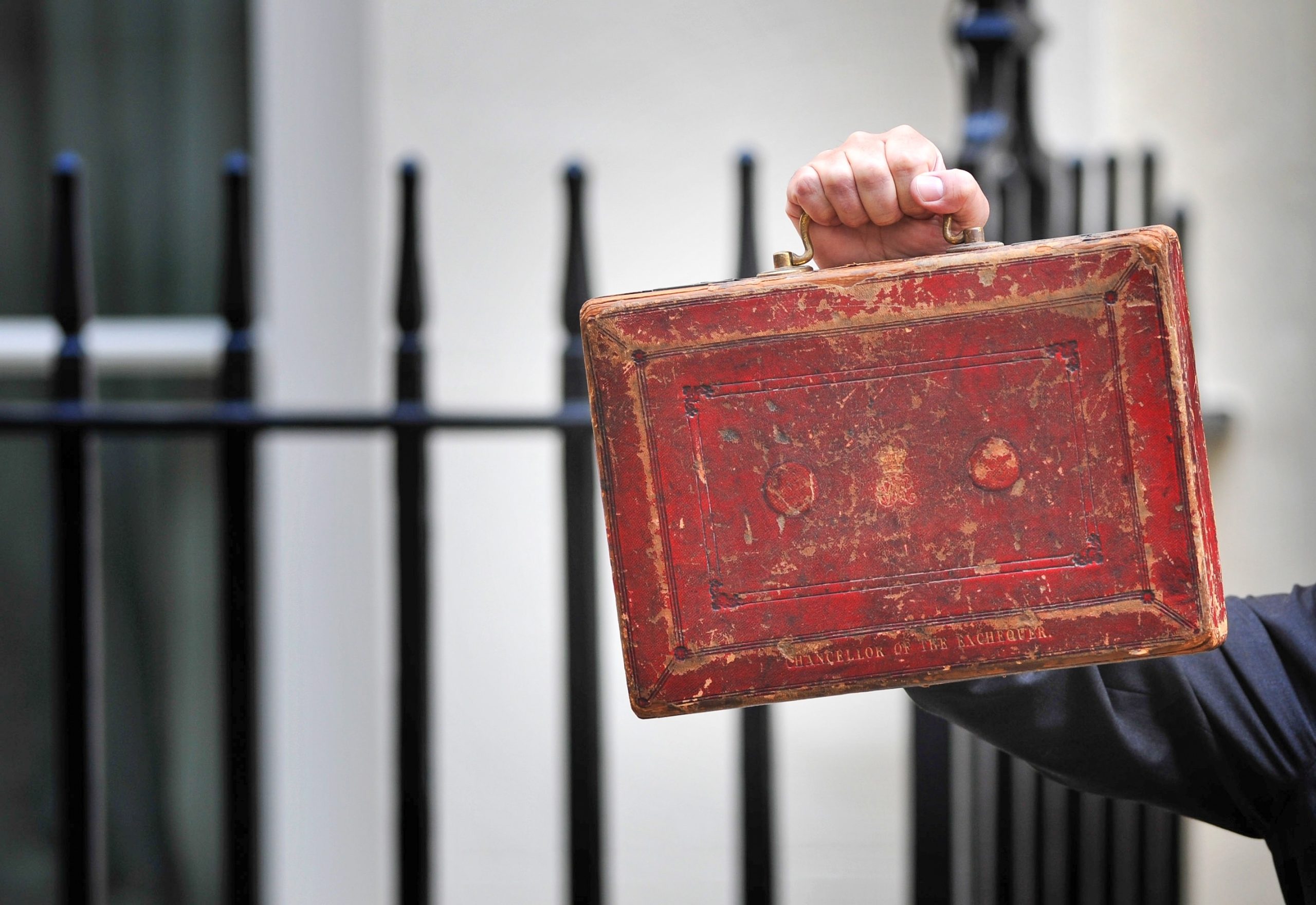
From entrepreneurship and employment costs to artificial intelligence, business rates and devolution, Oxfordshire business leaders share their reactions to the Chancellor’s Autumn Budget.
The Chancellor’s Autumn Budget has prompted a mixed response from the B4 business community, with business leaders welcoming selected measures to support entrepreneurship and innovation while expressing significant concerns about the cost of employing people, the complexity of taxation and the continued uncertainty facing businesses.
Contributors from across Oxfordshire’s business community, representing professional services, technology, manufacturing, investment, human resources and the charitable sector, have offered their immediate assessments of what the announcements could mean for their organisations, their clients and the wider economy.
While there are reasons for cautious optimism, a recurring message is that businesses need more than targeted incentives. They need confidence, stability and the freedom to invest, employ and grow.
Business Confidence: A Budget That Falls Short?
For several contributors, the central concern is whether the Budget will generate the economic confidence needed to stimulate meaningful growth.
 Stuart Crook, B4 Board Member, believes the Chancellor has delivered a relatively balanced Budget, but questions whether it goes far enough to encourage investment.
“The Budget feels relatively balanced overall, offering some reassurance to markets, but less encouragement to SMEs. Once again, it appears more about reallocating existing resources than delivering radical change.”
Stuart points to the cumulative pressures facing business owners, property investors and those considering development, investment or an eventual exit.
“In Oxfordshire, we continue to wait for the details around future investment from the devolved powers once again mentioned in Westminster.
“Ultimately, economic growth depends on entrepreneurs willing to invest, employ people and take risks. My concern is that the Chancellor appears less willing to back that ambition than the businesses expected to deliver it.”
 David Finch, Founder of Thinking in Fields, offers an equally challenging assessment, questioning the underlying economic philosophy.
“Once again, this Budget seems more concerned with the cost of everything than the value of anything.”
David argues that freezing tax thresholds while increasing the minimum wage squeezes the financial rewards associated with career progression, while smaller concessions risk disguising an increasing overall tax burden.
“With the country already heavily indebted, we need an economy focused on creating real value (not simply the headline measure of economic growth), rather than increasingly elaborate ways of redistributing wealth whilst its purchasing power is steadily being eroded.”
 Tony Haines, Partner at Wenn Townsend, is particularly critical.
“Weak and lame budget lacking in the measures needed to fire up the economy.”
Tony also raises concerns about increases in taxation on investment and rental income, warning that additional costs could ultimately be passed on to tenants.
He questions the sustainability of increasing welfare commitments against a backdrop of constrained economic growth.
Employment Costs: Can Businesses Afford to Create Jobs?
The cost of employing people emerges as one of the strongest themes across the community’s responses.
 Samantha Newton FCIPD, Founder of Magenta HR Consulting, believes the Budget sends contradictory signals to employers.
“The Chancellor wants businesses to invest, innovate and create jobs, yet the economic outlook gives employers little reason to feel more confident.”
Samantha highlights forecasts of weak economic growth, falling business investment and rising minimum wages as factors likely to influence recruitment decisions.
“Working with owner-managed businesses, I see how financial pressures influence recruitment, staffing and investment decisions. When costs rise faster than confidence, employers become cautious, and opportunities for employees can suffer.”
While acknowledging the importance of fair pay and employment protections, Samantha stresses that policymakers must recognise the commercial realities of creating sustainable employment.
Her conclusion is particularly striking:
“We cannot build a stronger economy by encouraging businesses to start while making them increasingly hesitant to employ.”
 Lee Baker, Partner at Wenn Townsend, shares many of these concerns.
“The Budget includes some welcome measures for businesses, but I’m not convinced it will significantly improve confidence. From conversations with clients this afternoon, the main concern remains the cost and complexity of employing people and running a business in the UK.”
Lee warns that increases in the National Living Wage will add further pressure to employers already managing higher wage bills and operating costs.
“There are positives for investment and smaller businesses, but what businesses need most is stability, simplicity and the confidence to invest.”
He also highlights the potential impact of further changes to Business Asset Disposal Relief, arguing that entrepreneurs need greater certainty when planning for the future.
Entrepreneurship: Supporting Start-Ups Without Forgetting Established Businesses
Measures intended to encourage entrepreneurship have received a warmer response, although contributors question whether support is being distributed fairly across different types of businesses.
 Robert Pilkington, Joint CEO of Ebbon Group, welcomes measures aimed at younger entrepreneurs, particularly those who do not have access to substantial personal or family financial support.
“Considering opportunities for the next generation, there was an interesting budget inclusion to help costs for young founders: ‘young entrepreneurs allowance’, which will cover a year of living costs for young founders and a trading allowance which raises the tax-free allowance on earnings of new ventures from £1,000 to £3,000.”
Robert believes these initiatives could help remove some of the barriers facing people starting businesses.
“With the current high cost of living, especially for those starting out without wealthy families or backers these sorts of measures could be helpful. Whether they make enough difference is another question.”
 However, Peter Swanson, Founder and Executive Chair of Intertronics, questions the apparent distinction between innovative high-growth businesses and more conventional enterprises.
“Confused of Kidlington here.”
Peter points to the contrast between a proposed Capital Gains Tax relief for founders of qualifying high-growth innovative businesses and a reduction in the lifetime limit for Business Asset Disposal Relief.
He questions why an entrepreneur who has spent decades building a successful retail, engineering or service business should potentially receive less favourable tax treatment than the founder of a qualifying technology start-up.
“Innovation and economic value are not confined to high-growth companies. The distinction appears to favour a particular model of entrepreneurship rather than entrepreneurship itself.”
It is a distinction with particular relevance to Oxfordshire, where internationally recognised innovation businesses operate alongside a substantial community of established, owner-managed companies.
Both contribute to employment, skills development, supply chains and the county’s wider economic prosperity.
AI Investment: The Technology Matters, but People Matter More
The Budget’s artificial intelligence announcements have been welcomed in principle, but questions remain about whether the investment will translate into practical support for smaller organisations.
 Marnie Wills, Business Strategist and AI Educator, believes the Government has addressed some important strategic priorities.
“This Budget gets the serious things right on AI: security, safety and a home for British AI firms to grow.”
However, Marnie argues that the challenges facing SMEs, charities and leadership teams are often much more immediate.
“But the small businesses, charities and leadership teams I work with aren’t asking about chips or biosecurity. They’re asking, ‘Where do I start, and how do I do it safely?’ That’s where it feels thin.”
She highlights the relatively small proportion of the Government’s proposed AI investment allocated to local partnerships and notes that Oxfordshire is still awaiting clarity around its future mayoral arrangements.
Marnie encourages business leaders to take advantage of the Government’s free AI Skills Boost training, while making the case for greater investment in learning and development.
“The tools are the cheap part – the people’s capability is the real investment.”
She adds:
“I’d like to see government put far more into learning, development and reskilling, and I’d encourage small businesses to set aside a bigger budget for learning and development in 2027 and beyond.”
For Oxfordshire’s business community, the message is clear: the benefits of AI will depend not simply on access to technology, but on the skills, confidence and judgement of the people using it.
Rural Businesses and Community Ownership: Welcome Relief, but More Support Needed
 James Alcock, Chief Executive at Plunkett UK, welcomes the announced increase in the Business Rates threshold from £12,000 to £18,000.
For community-owned businesses, particularly those operating in rural areas, the change could provide valuable financial breathing space.
“Plunkett UK welcomes the increase in the Business Rates threshold from £12,000 to £18,000, which could provide much-needed financial relief for community-owned businesses in Oxfordshire and beyond, helping them remain viable and maintain vital local services.”
However, James stresses that short-term relief must be accompanied by long-term certainty.
“We are also disappointed by the lack of further funding commitments for co-operatives and await more detail on support for community ownership of local assets. Any funding must be accessible and targeted at those who need it most.”
Plunkett UK is also calling for a more tailored approach to rural economic policy.
“More broadly, we are calling on the Government to ensure its policies better reflect the particular challenges facing rural businesses, rather than taking a one-size-fits-all approach.”
For Oxfordshire’s villages and rural communities, the survival of local shops, pubs and other community-owned assets can have consequences far beyond their direct economic contribution.
Devolution: What Does the Budget Mean for Oxfordshire?
The future of devolution and regional investment remains an important area of uncertainty.
 Penny Rinta-Suksi, Partner at Blake Morgan LLP, identifies an interesting detail in the Chancellor’s references to the proposed Thames Valley mayoral authority.
“It’s interesting that Bucks were not mentioned in the Thames Valley mayoral authority descriptor, and that Swindon were mentioned.”
Penny also highlights the suggestion that mayoral authorities may be able to proceed without waiting for local government reorganisation to be completed.
“We need to watch this space in Oxfordshire and the actual Thames Valley footprint as we know it.”
Her observations underline the importance of understanding how future regional governance arrangements could affect investment, infrastructure and decision-making across Oxfordshire and neighbouring areas.
With businesses looking for greater clarity on transport, housing, skills and economic development, the eventual shape and powers of any mayoral authority will be closely watched.
Investment and Financial Planning: Reasons for Cautious Optimism
Not all contributors view the Budget predominantly through a negative lens.
 Andrew Reed, Chief Client Services Officer at Wise Investment, believes the overall direction was broadly in line with expectations.
“I expected a fairly cautious Budget, so the overall direction wasn’t a surprise. There are, however, some positive measures for businesses, particularly the support for entrepreneurs and changes affecting business owners planning an eventual exit.”
Andrew welcomes the stability around ISAs and Capital Gains Tax from a financial planning perspective.
“For Wise Investment, the stability around ISAs and Capital Gains Tax is also welcome, as it gives clients greater certainty when making financial decisions.”
However, he acknowledges that the longer-term impact will be the ultimate test.
“The real question is whether these measures translate into greater business investment, confidence and sustainable economic growth. I’m cautiously optimistic, but it will be the longer-term impact that matters most.”
The B4 Community Verdict: Confidence Is the Missing Ingredient
Taken together, the responses reveal a business community that is far from universally pessimistic, but remains unconvinced that the Budget will deliver the step change in confidence needed to stimulate investment and growth.
There is recognition of positive measures, particularly those supporting younger entrepreneurs, AI development, business rates relief and financial planning certainty.
However, several common concerns emerge:
- Employment costs: Rising wages and other operating pressures could discourage businesses from recruiting.
- Entrepreneurial incentives: Support for innovation is welcome, but established businesses must not be overlooked.
- Business confidence: Stability, simplicity and predictability remain essential for investment decisions.
- AI and skills: Investment in technology must be matched by investment in the people expected to use it.
- Rural communities: Business rates relief is welcome, but sustainable community ownership requires a longer-term approach.
- Devolution: Oxfordshire businesses need greater clarity about future governance arrangements and regional investment.
Perhaps the strongest message is that economic growth cannot be delivered by government announcements alone. It depends on the confidence of businesses to take risks, recruit people, invest in new ideas and plan for the future.
The B4 community represents businesses of different sizes, sectors and ambitions, and these contributions demonstrate why that diversity of perspective matters.
The Chancellor has outlined the Government’s priorities. The challenge now is whether those priorities translate into practical improvements for the businesses expected to deliver growth.
For Oxfordshire’s business community, the verdict is mixed: some welcome initiatives, some significant concerns, and a shared desire for greater certainty.
The real test of Budget 2026 will not be how it was received on the day, but whether businesses feel more confident to invest, employ and grow in the months and years ahead.
Sources and further reading
The following sources were supplied by Marnie Wills in support of her commentary on artificial intelligence and regional investment:
- HM Treasury – Budget 2026
- Office for Budget Responsibility – Economic and Fiscal Outlook, October 2026
- GOV.UK – Chancellor unveils Britain’s ambitious plan for AI
- GOV.UK – Free AI training through AI Skills Boost
- BBC – Thames Valley devolution plans put to government
This article brings together the independent views of B4 community contributors following the Autumn Budget on 28 October 2026. The opinions expressed are those of the individual contributors and do not necessarily represent the views of B4.