Story Museum 23rdJuly2025 AW70764 007 scaled
Related Company: The Story Museum

Building A Lifelong Love of Reading

15th Oct 2026

The Story Museum’s Emily Davies discusses the importance of Early Years reading experiences, and the Museum’s approach to supporting learning.  

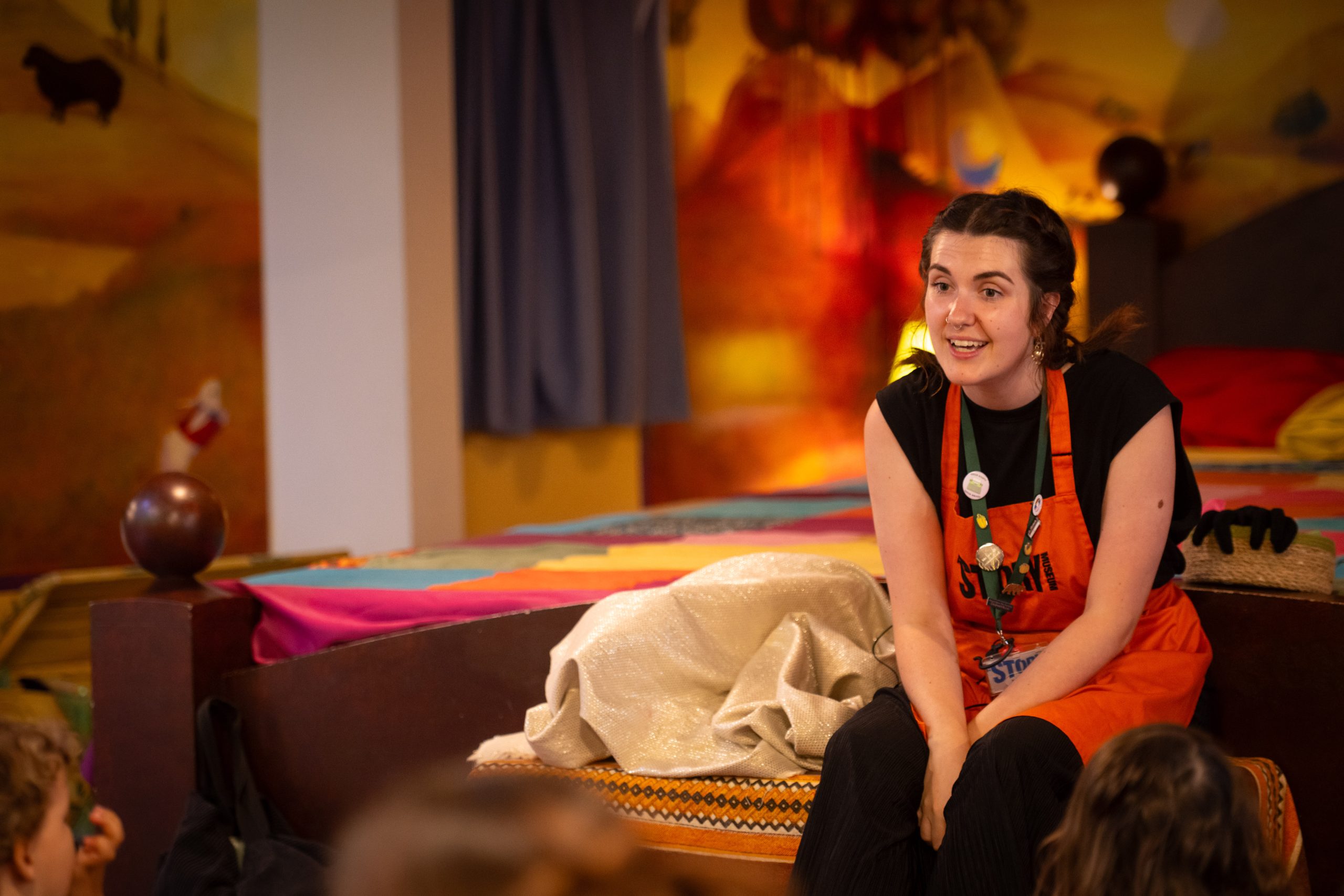
Emily Davies is a Story Leader at The Story Museum, working with the Museum’s Learning team. A qualified primary school teacher, she delivers storytelling and learning sessions to visiting children and their families, as well as travelling to schools, taking The Story Museum’s expertise and unique learning approach to classrooms across the county.   

‘At The Story Museum, we love being a part of children’s reading journeys – from that very first story explored and far beyond. I have been working for the Learning Team at The Story Museum for the last 4 years, engaging with a range of visitors – from newborns to grandparents! Within that role, I work in our designated Early Years space: Small Worlds, where we bring Early Reading experiences to the under-fives and their families, through a mixture of storytelling, songs and play.

As well as our public offer, our learning team works in a variety of outreach projects such as Spellbound Schools, where we partner with 7 local Primary Schools to offer fully funded visits to the museum, as well as school visits, bringing storytelling into their classrooms. Meanwhile, our project Start with a Story focused primarily on Early Years children and their families. We worked with community centres across Oxfordshire to deliver storytelling sessions and build up those Early Reading experiences. Both projects have provided wonderful opportunities for children to immerse themselves in stories and play and it has helped us to form those all-important bonds within our local community.

Just recently, we received a grant of £225,000 from The Julia Rausing Trust, meaning that The Story Museum’s Learning Programme can engage even more children through stories, supporting creativity, literacy and wellbeing for the next three years.  Learning, and building cultural capital in the Early Years has been a much talked about topic, and this funding will allow us to bring the transformative power of storytelling to more than 150 schools annually.

Before my time at the Story Museum, I worked as a Primary School teacher where I taught Early Years and Key Stage 1 children, as well as spending some time working in Nurseries. As a teacher, I always tried to make time for stories – I knew it was important to share stories with children, and I knew how much I loved reading and hearing stories. But how could I ensure that the children themselves were as engaged as I wanted them to be?

Well, every child is different, and so every child will engage (or not!) in different ways. But, at The Story Museum, we have discovered a few useful tips over the years.


  1. Choose a story that you both enjoy

When it comes to children’s early reading experiences, engagement is key. We want children to find fun and interaction with whichever story you are sharing with them. If we want to make life-long readers for pleasure, we must first start with these very joyful early experiences. One way to increase the likelihood of engagement, is to choose a children’s story that draws you, the adult, in as well. Let’s face it, there are a lot of picture books out there, and not every single one will appeal to you or your child – don’t force yourself through a book if it isn’t sparking joy. Sharing a story that you enjoy will undoubtedly change the way that you tell it and make your child’s enjoyment of the story much more likely.

  1. Encourage your child to play and interact with the book

Reading doesn’t have to be a quiet, passive experience – instead, encourage playfulness when sharing a story! Choosing a story with humour in it is an easy way to encourage playfulness, but it could also be as simple as asking questions about what is happening and suggesting playful responses. E.g. ‘Can you see the children dancing in this picture? That looks like fun! Shall we do some dancing?’ You can also model the response yourself, as young children are likely to imitate you. These interactions help children to make meaning and connect stories to their own early experiences and understanding – and it leads to lots of fun!

  1. Get moving!

There has been lots of discussion recently around children becoming ‘school ready’ and what this looks like. The problem is, this can generate images of children ‘sitting still’ and showing that they are listening when hearing a story – crossed legs, hands in laps, and so on. And while there is a time and place for this, this top-down thinking can impact the expectations we place upon our babies and toddlers. Children may wish to lay down, snuggle in or even walk around while listening to a story – this does not mean that they’re not listening. Children can and will respond to stories in a variety of different ways – be prepared for the unexpected, and roll with it! Allowing children the time and space to move and play with stories can create a feeling of fun and curiosity that can continue long after the story is finished.

  1. Follow their interests

Is your child mad for dinosaurs? Perhaps they’re interested in trains, or princesses? Whatever their fascination, why not look for a story that follows that interest? This is a great way to introduce them to reading, as they will soon learn that reading can mean exploring and enjoying the thing that they love! It also means that you can share in that interest, creating a more meaningful interaction between you and your child. You may also find that storytelling in turn seeps into their play – maybe the next time they play with their train set, they might give characterisation to their trains or create a narrative around what is happening at the train station that day.

  1. Be flexible – early reading is different for everyone

Try not to get disheartened if your child isn’t giving you the reaction you expect when sharing a story with them. There are lots of ways to experience stories – try singing with them, dancing, playing with toys, dressing up, building a den with blankets. These are all ways that children make meaning and connect with stories and experiences other than their own. Try to remember that the point of sharing stories is to have fun and build the world around them – it doesn’t have to look a certain way, in fact it can look however you would like it to.


So, there you have it: 5 top tips for keeping children in the Early Years engaged in your storytelling. I hope it helps you, but really the most important piece of advice I can give you, is to ask yourself: ‘why am I sharing this story?’ Whatever your answer, use that to inform your telling. And remember to enjoy it, so that they’ll never forget it. ‘


www.storymuseum.org.uk

www.1001stories.co.uk

Back to news

Building A Lifelong Love of Reading

15th Oct 2026
Story Museum 23rdJuly2025 AW70764 007 scaled
Related Company: The Story Museum

The Story Museum’s Emily Davies discusses the importance of Early Years reading experiences, and the Museum’s approach to supporting learning.  

Emily Davies is a Story Leader at The Story Museum, working with the Museum’s Learning team. A qualified primary school teacher, she delivers storytelling and learning sessions to visiting children and their families, as well as travelling to schools, taking The Story Museum’s expertise and unique learning approach to classrooms across the county.   

‘At The Story Museum, we love being a part of children’s reading journeys – from that very first story explored and far beyond. I have been working for the Learning Team at The Story Museum for the last 4 years, engaging with a range of visitors – from newborns to grandparents! Within that role, I work in our designated Early Years space: Small Worlds, where we bring Early Reading experiences to the under-fives and their families, through a mixture of storytelling, songs and play.

As well as our public offer, our learning team works in a variety of outreach projects such as Spellbound Schools, where we partner with 7 local Primary Schools to offer fully funded visits to the museum, as well as school visits, bringing storytelling into their classrooms. Meanwhile, our project Start with a Story focused primarily on Early Years children and their families. We worked with community centres across Oxfordshire to deliver storytelling sessions and build up those Early Reading experiences. Both projects have provided wonderful opportunities for children to immerse themselves in stories and play and it has helped us to form those all-important bonds within our local community.

Just recently, we received a grant of £225,000 from The Julia Rausing Trust, meaning that The Story Museum’s Learning Programme can engage even more children through stories, supporting creativity, literacy and wellbeing for the next three years.  Learning, and building cultural capital in the Early Years has been a much talked about topic, and this funding will allow us to bring the transformative power of storytelling to more than 150 schools annually.

Before my time at the Story Museum, I worked as a Primary School teacher where I taught Early Years and Key Stage 1 children, as well as spending some time working in Nurseries. As a teacher, I always tried to make time for stories – I knew it was important to share stories with children, and I knew how much I loved reading and hearing stories. But how could I ensure that the children themselves were as engaged as I wanted them to be?

Well, every child is different, and so every child will engage (or not!) in different ways. But, at The Story Museum, we have discovered a few useful tips over the years.


  1. Choose a story that you both enjoy

When it comes to children’s early reading experiences, engagement is key. We want children to find fun and interaction with whichever story you are sharing with them. If we want to make life-long readers for pleasure, we must first start with these very joyful early experiences. One way to increase the likelihood of engagement, is to choose a children’s story that draws you, the adult, in as well. Let’s face it, there are a lot of picture books out there, and not every single one will appeal to you or your child – don’t force yourself through a book if it isn’t sparking joy. Sharing a story that you enjoy will undoubtedly change the way that you tell it and make your child’s enjoyment of the story much more likely.

  1. Encourage your child to play and interact with the book

Reading doesn’t have to be a quiet, passive experience – instead, encourage playfulness when sharing a story! Choosing a story with humour in it is an easy way to encourage playfulness, but it could also be as simple as asking questions about what is happening and suggesting playful responses. E.g. ‘Can you see the children dancing in this picture? That looks like fun! Shall we do some dancing?’ You can also model the response yourself, as young children are likely to imitate you. These interactions help children to make meaning and connect stories to their own early experiences and understanding – and it leads to lots of fun!

  1. Get moving!

There has been lots of discussion recently around children becoming ‘school ready’ and what this looks like. The problem is, this can generate images of children ‘sitting still’ and showing that they are listening when hearing a story – crossed legs, hands in laps, and so on. And while there is a time and place for this, this top-down thinking can impact the expectations we place upon our babies and toddlers. Children may wish to lay down, snuggle in or even walk around while listening to a story – this does not mean that they’re not listening. Children can and will respond to stories in a variety of different ways – be prepared for the unexpected, and roll with it! Allowing children the time and space to move and play with stories can create a feeling of fun and curiosity that can continue long after the story is finished.

  1. Follow their interests

Is your child mad for dinosaurs? Perhaps they’re interested in trains, or princesses? Whatever their fascination, why not look for a story that follows that interest? This is a great way to introduce them to reading, as they will soon learn that reading can mean exploring and enjoying the thing that they love! It also means that you can share in that interest, creating a more meaningful interaction between you and your child. You may also find that storytelling in turn seeps into their play – maybe the next time they play with their train set, they might give characterisation to their trains or create a narrative around what is happening at the train station that day.

  1. Be flexible – early reading is different for everyone

Try not to get disheartened if your child isn’t giving you the reaction you expect when sharing a story with them. There are lots of ways to experience stories – try singing with them, dancing, playing with toys, dressing up, building a den with blankets. These are all ways that children make meaning and connect with stories and experiences other than their own. Try to remember that the point of sharing stories is to have fun and build the world around them – it doesn’t have to look a certain way, in fact it can look however you would like it to.


So, there you have it: 5 top tips for keeping children in the Early Years engaged in your storytelling. I hope it helps you, but really the most important piece of advice I can give you, is to ask yourself: ‘why am I sharing this story?’ Whatever your answer, use that to inform your telling. And remember to enjoy it, so that they’ll never forget it. ‘


www.storymuseum.org.uk

www.1001stories.co.uk

Back to news