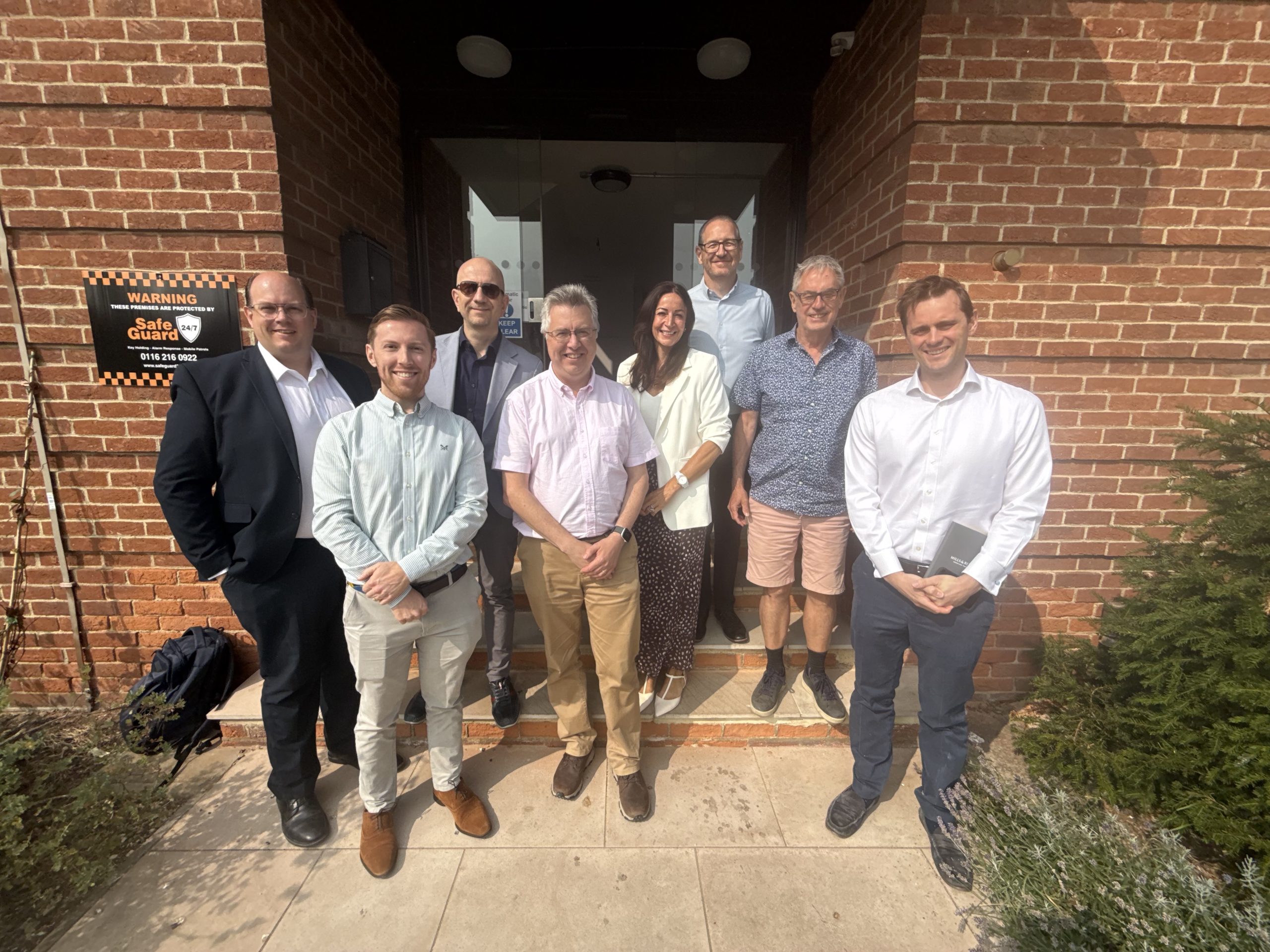
Artificial Intelligence dominated discussion at the latest Corum Six, hosted by Simon Blake of Price Bailey. Yet rather than debating whether AI will transform business—that question has largely been answered—the conversation centred on something far more important: how do leaders embrace AI without losing the qualities that make organisations successful in the first place?
The consensus was clear. AI is an extraordinary accelerator, but it is not a substitute for experience, judgement or leadership.
Today’s AI tools can summarise reports, draft proposals, analyse data and answer increasingly complex questions in seconds. Used well, they have the potential to remove countless hours of administration and dramatically improve productivity. But the discussion repeatedly returned to one fundamental point: AI can generate answers, yet it cannot reliably determine whether those answers are the right ones.
That distinction matters.
Knowing which questions to ask, recognising when something doesn’t feel quite right, understanding context and making balanced decisions remain uniquely human strengths. As AI becomes more capable, judgement becomes more valuable—not less.
One particularly interesting theme was organisational knowledge.
Every business accumulates decades of experience through its people. Unfortunately, much of that knowledge leaves when individuals retire or move on. Members explored how AI could help capture institutional expertise, creating a searchable knowledge base that future employees can learn from rather than continually reinventing solutions. For many organisations, this could prove one of AI’s greatest long-term benefits.
However, the conversation also highlighted a significant challenge.
For generations, young professionals have developed expertise by completing routine tasks before gradually taking on greater responsibility. If AI increasingly performs much of that foundational work, where will tomorrow’s experts gain their experience?
Simon Blake offered a thought-provoking perspective on this. He suggested that today’s leaders are often biased by the way they themselves learnt. Most senior executives built their professional skills before the arrival of the smartphone, through experience, repetition and gradual exposure to increasingly complex challenges. Today’s young people, by contrast, have grown up with the smartphone at the centre of how they learn, communicate and solve problems. The next generation will know only a world shaped by artificial intelligence. As each generation’s learning methods evolve, leaders will need to rethink not only how they develop talent, but also avoid assuming that tomorrow’s professionals will learn in the same way they did.
It is a question with no easy answer.
While AI can undoubtedly improve efficiency, leaders will need to think carefully about how they continue developing talent, creating opportunities for learning, mentoring and critical thinking rather than allowing technology to remove those stepping stones entirely.
Governance was another recurring topic.
AI is no longer simply an IT issue. It is becoming a boardroom issue.
Questions around confidentiality, data security, intellectual property, compliance and ethical use require clear organisational policies. Businesses that encourage experimentation while establishing sensible guardrails are likely to benefit most, whereas those that either ignore AI or adopt it without oversight risk falling behind—or creating unnecessary exposure.
As B4’s AI expert, Marnie Wills, observed, the shift from “AI is an IT issue” to “AI is a boardroom issue” is one of the most significant changes facing organisations today. Many SME leaders still view AI policy as something to address in the future, but the reality is that the future has already arrived. Questions around confidentiality, data security, intellectual property, compliance and ethical use now demand board-level oversight. Businesses that encourage experimentation while establishing sensible guardrails are likely to benefit most, whereas those that either ignore AI or adopt it without appropriate governance risk falling behind—or creating unnecessary exposure.
Perhaps the most encouraging conclusion from the discussion was that AI may actually increase the value of distinctly human qualities.
Relationships remain difficult to automate. So does empathy. Trust cannot be generated by an algorithm. Neither can the ability to read a room, navigate difficult conversations or inspire confidence during periods of uncertainty. These characteristics have always defined exceptional leaders. The emergence of AI simply reinforces their importance.
Indeed, as access to powerful AI tools becomes increasingly universal, competitive advantage may depend less on the technology itself and more on the people using it. Organisations with curious leaders, collaborative cultures and strong decision-making processes are likely to gain the greatest benefit, because AI amplifies capability—it does not replace it.
Perhaps the most fitting takeaway from the morning was that, while AI will undoubtedly transform the way we work, it is unlikely ever to replicate conversations like this one. The willingness to challenge ideas, share lived experience, ask difficult questions and build trust through open discussion remains uniquely human. Technology can inform decisions, but it cannot replace the value created when experienced leaders sit around a table, debate different perspectives and learn from one another.
In many ways, that reinforces the purpose of Corum. As AI becomes more capable, the value of trusted peer networks will only increase. Bringing together Oxfordshire’s senior leaders to exchange ideas, test assumptions and build meaningful relationships is something no algorithm can recreate. If anything, the AI revolution makes communities like B4 and Corum more relevant than ever.
Corum. Better conversations. Better decisions. In person.
About Corum
Corum is B4’s leadership community for many of Oxfordshire’s most experienced business leaders, bringing together senior decision-makers from across the county to share ideas, challenge thinking and discuss the issues shaping the future of their organisations. Through its Corum Quarterlies and the more intimate Corum Six sessions, members benefit from candid conversations that simply don’t happen in larger networking environments. In an age where AI can answer almost any question, Corum exists because some of the most valuable insights still come from trusted people sitting around a table together. It is a community where experience is shared openly, perspectives are broadened and lasting relationships are built.