55463734075 3f1e8c22be o scaled e1788770957618
Related Company: Blenheim

Demand Is There — But So Are the Costs: Dominic Hare’s View from Blenheim

7th Sep 2026

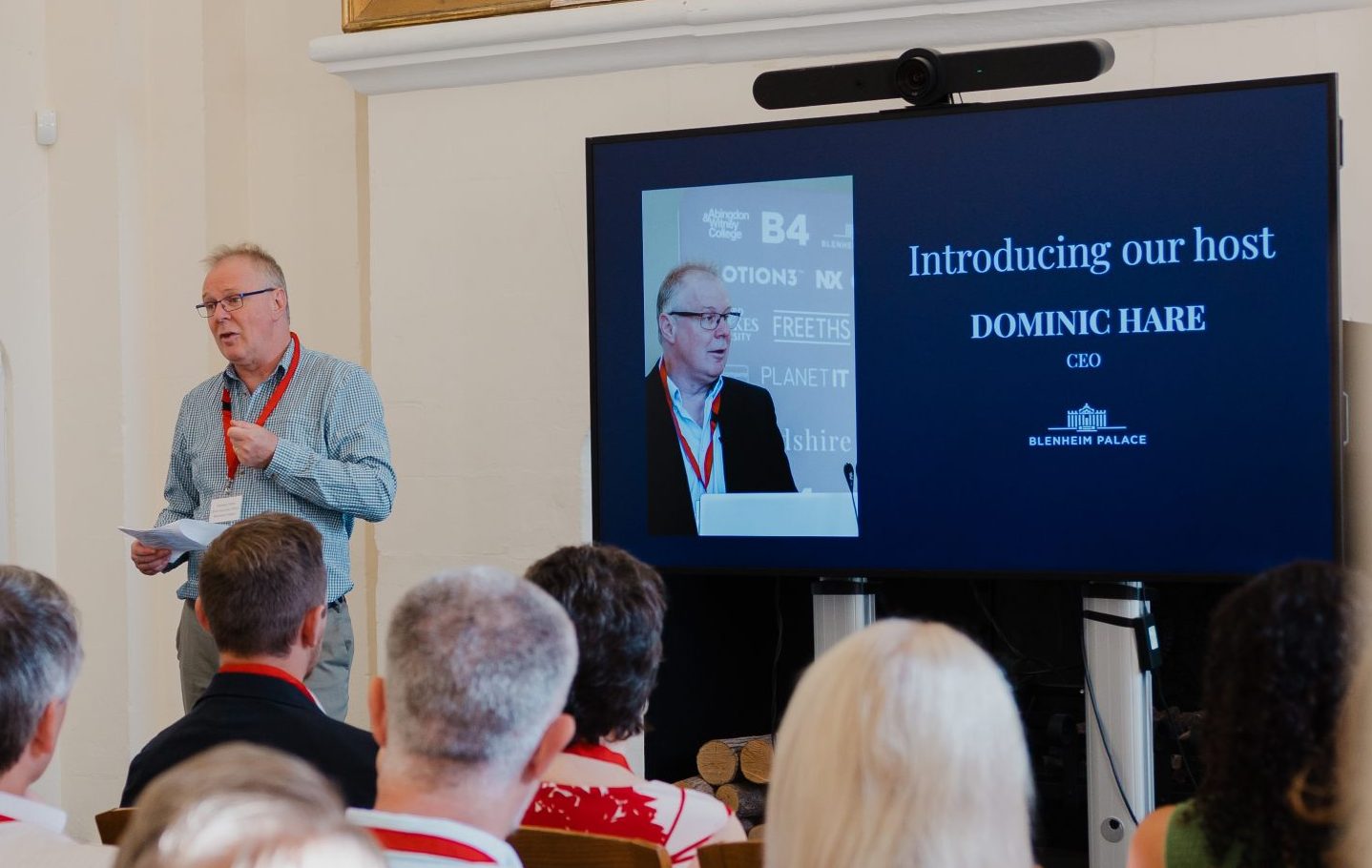
Blenheim Palace CEO Dominic Hare gave B4 Platinum Members a snapshot of the opportunities and pressures currently being experienced across the Blenheim Estate — from visitor attractions and housebuilding to commercial property, farming and land.

Few businesses provide quite such a broad perspective on the UK economy as Blenheim.

With interests spanning its visitor attraction, housebuilding, commercial property and a substantial landed estate, including farming, Blenheim is exposed to very different markets.

Yet speaking at the latest B4 Platinum Breakfast, CEO Dominic Hare suggested that each part of the organisation is currently telling a surprisingly similar story.

Demand is there when businesses work hard to generate it.

The greater challenge is the cost of delivering against that demand.

Visitors Are Still Coming – But Behaviours Are Changing

Dominic began with Blenheim’s best-known activity: welcoming visitors to the Palace and Estate.

Around one million visitors have come through the gates since the previous June, providing strong evidence that consumers haven’t lost their appetite for a quality day out.

What has changed significantly is how and when people decide to visit.

Where guests might once have booked around ten days in advance, Dominic said that the booking window has collapsed dramatically, with some visitors now making their decision on the day — sometimes only shortly before arriving.

Visitor behaviour is changing in other ways too.

During hot weather, guests have tended to arrive earlier and stay for shorter periods. Prolonged heat has also demonstrated that there is a temperature at which visitor numbers begin to tail away noticeably.

That presents an operational challenge.

Staffing and infrastructure still have to be in place, while costs associated with keeping visitors comfortable can increase. Food wastage and other operational inefficiencies can also become more difficult to manage when demand moves unpredictably throughout the day.

Retail and catering, however, have continued to hold their own.

Dominic also pointed to the positive impact of changes to VAT on admission tickets, with trading performance improving noticeably since their introduction.

The wider lesson was that demand hasn’t disappeared, but businesses increasingly have to work harder to understand what triggers consumers to act.

Price, proposition, weather and timing can all influence a decision that is now being made much later than it once was.

Housing: Demand Meets the Cost of Regulation

Blenheim’s housebuilding activities offer another perspective.

Dominic described a challenging summer market, with heat making construction sites less comfortable and potential buyers less inclined to spend their Saturday mornings viewing developments.

Yet he also noted how quickly sentiment can change.

When positive economic signals emerge — particularly around interest rates — Blenheim sees interest rise.

The underlying demand, therefore, remains.

The bigger concern is the growing stack of costs attached to building homes.

Dominic highlighted biodiversity net gain requirements, infrastructure contributions and other regulatory obligations which, while potentially justifiable individually, can have a major cumulative impact on development economics.

On some sites, he said, those additional costs can amount to around £80,000 per home.

That creates an obvious tension.

Government and society want more homes, but the economics of delivering those homes become increasingly difficult when additional requirements collectively consume much of the potential margin.

Commercial Property Moving Quickly

Blenheim’s commercial property portfolio is deliberately diverse, ranging from relatively straightforward commercial holdings to more significant investments.

Here, Dominic described a market where decisions and delivery can move extremely quickly.

That creates its own pressures, particularly around the planning process and the cost of progressing projects.

Across the portfolio, therefore, the issue isn’t necessarily a shortage of opportunity. It is the increasing expense and complexity involved in converting opportunity into viable development.

The Growing Competition for Land

Dominic also touched on one of the most important long-term questions facing landed estates such as Blenheim: what is land ultimately for?

Historically, the obvious answer might have been food production. Today, the same land faces competing demands from food, energy, housing, nature and water. All are important. All require space. And reconciling those competing priorities is becoming increasingly difficult.

Political and regulatory uncertainty adds another layer of complexity. Decisions can be delayed, policies can change and major proposals can become subject to legal challenge and long term weather can dramatically impact the attractiveness (or not) of all those uses.

For businesses trying to make decisions over decades rather than months, that uncertainty makes investing in and promoting long-term land use increasingly expensive and risky.

When Costs Aren’t Set by the Market

The thread connecting Dominic’s update was cost.

In a conventional market, changes in customer demand or supplier pricing tend eventually to generate a response across the market.

The more difficult costs, Dominic suggested, are those businesses have relatively little ability to control.

Employment costs, National Insurance, regulation, planning obligations, energy and compliance requirements can all rise without businesses being able simply to pass those increases on to customers.

A visitor attraction can’t automatically increase its admission price every time employment costs rise.

A housebuilder can’t assume buyers will pay more because regulatory costs have increased.

A caterer faces the same challenge when input costs rise faster than customers’ willingness to spend.

That gap between what businesses need to charge and what customers are prepared to pay is where pressure on margins inevitably develops.

Optimistic – But Not Complacent

Despite the challenges, Dominic’s update wasn’t pessimistic.

If anything, his central observation was encouraging: the demand is still there.

People still want great experiences.

They still want homes.

Businesses still need commercial space.

And land remains an extraordinarily valuable resource.

But organisations have to work harder than ever to unlock that demand while maintaining control of a cost base increasingly influenced by factors outside their direct control.

Dominic readily admitted that Blenheim itself does not yet feel fully on top of those pressures across every part of the organisation — and suspected that many business leaders in the room would recognise the feeling.

It was a refreshingly open conclusion from an organisation operating across several very different sectors.

The opportunities remain significant.

But in the current environment, strong demand alone isn’t enough. The businesses that succeed will increasingly be those able to convert that demand into sustainable returns while navigating an increasingly complicated and expensive operating environment.

Dominic closed by thanking B4 Members for their continued support and reiterating how much Blenheim values hosting the B4 Platinum community.

For B4 Members, his update offered something equally valuable in return: a window into how one of Oxfordshire’s most diverse organisations is experiencing today’s economy — and a reminder that whether you’re selling tickets, building homes, managing property or working the land, the challenge of balancing demand, cost and uncertainty is one being shared across the business community.

Catch up with all of the stories from B4 at b4-business.com/news/.

Back to news

Demand Is There — But So Are the Costs: Dominic Hare’s View from Blenheim

7th Sep 2026
55463734075 3f1e8c22be o scaled e1788770957618
Related Company: Blenheim

Blenheim Palace CEO Dominic Hare gave B4 Platinum Members a snapshot of the opportunities and pressures currently being experienced across the Blenheim Estate — from visitor attractions and housebuilding to commercial property, farming and land.

Few businesses provide quite such a broad perspective on the UK economy as Blenheim.

With interests spanning its visitor attraction, housebuilding, commercial property and a substantial landed estate, including farming, Blenheim is exposed to very different markets.

Yet speaking at the latest B4 Platinum Breakfast, CEO Dominic Hare suggested that each part of the organisation is currently telling a surprisingly similar story.

Demand is there when businesses work hard to generate it.

The greater challenge is the cost of delivering against that demand.

Visitors Are Still Coming – But Behaviours Are Changing

Dominic began with Blenheim’s best-known activity: welcoming visitors to the Palace and Estate.

Around one million visitors have come through the gates since the previous June, providing strong evidence that consumers haven’t lost their appetite for a quality day out.

What has changed significantly is how and when people decide to visit.

Where guests might once have booked around ten days in advance, Dominic said that the booking window has collapsed dramatically, with some visitors now making their decision on the day — sometimes only shortly before arriving.

Visitor behaviour is changing in other ways too.

During hot weather, guests have tended to arrive earlier and stay for shorter periods. Prolonged heat has also demonstrated that there is a temperature at which visitor numbers begin to tail away noticeably.

That presents an operational challenge.

Staffing and infrastructure still have to be in place, while costs associated with keeping visitors comfortable can increase. Food wastage and other operational inefficiencies can also become more difficult to manage when demand moves unpredictably throughout the day.

Retail and catering, however, have continued to hold their own.

Dominic also pointed to the positive impact of changes to VAT on admission tickets, with trading performance improving noticeably since their introduction.

The wider lesson was that demand hasn’t disappeared, but businesses increasingly have to work harder to understand what triggers consumers to act.

Price, proposition, weather and timing can all influence a decision that is now being made much later than it once was.

Housing: Demand Meets the Cost of Regulation

Blenheim’s housebuilding activities offer another perspective.

Dominic described a challenging summer market, with heat making construction sites less comfortable and potential buyers less inclined to spend their Saturday mornings viewing developments.

Yet he also noted how quickly sentiment can change.

When positive economic signals emerge — particularly around interest rates — Blenheim sees interest rise.

The underlying demand, therefore, remains.

The bigger concern is the growing stack of costs attached to building homes.

Dominic highlighted biodiversity net gain requirements, infrastructure contributions and other regulatory obligations which, while potentially justifiable individually, can have a major cumulative impact on development economics.

On some sites, he said, those additional costs can amount to around £80,000 per home.

That creates an obvious tension.

Government and society want more homes, but the economics of delivering those homes become increasingly difficult when additional requirements collectively consume much of the potential margin.

Commercial Property Moving Quickly

Blenheim’s commercial property portfolio is deliberately diverse, ranging from relatively straightforward commercial holdings to more significant investments.

Here, Dominic described a market where decisions and delivery can move extremely quickly.

That creates its own pressures, particularly around the planning process and the cost of progressing projects.

Across the portfolio, therefore, the issue isn’t necessarily a shortage of opportunity. It is the increasing expense and complexity involved in converting opportunity into viable development.

The Growing Competition for Land

Dominic also touched on one of the most important long-term questions facing landed estates such as Blenheim: what is land ultimately for?

Historically, the obvious answer might have been food production. Today, the same land faces competing demands from food, energy, housing, nature and water. All are important. All require space. And reconciling those competing priorities is becoming increasingly difficult.

Political and regulatory uncertainty adds another layer of complexity. Decisions can be delayed, policies can change and major proposals can become subject to legal challenge and long term weather can dramatically impact the attractiveness (or not) of all those uses.

For businesses trying to make decisions over decades rather than months, that uncertainty makes investing in and promoting long-term land use increasingly expensive and risky.

When Costs Aren’t Set by the Market

The thread connecting Dominic’s update was cost.

In a conventional market, changes in customer demand or supplier pricing tend eventually to generate a response across the market.

The more difficult costs, Dominic suggested, are those businesses have relatively little ability to control.

Employment costs, National Insurance, regulation, planning obligations, energy and compliance requirements can all rise without businesses being able simply to pass those increases on to customers.

A visitor attraction can’t automatically increase its admission price every time employment costs rise.

A housebuilder can’t assume buyers will pay more because regulatory costs have increased.

A caterer faces the same challenge when input costs rise faster than customers’ willingness to spend.

That gap between what businesses need to charge and what customers are prepared to pay is where pressure on margins inevitably develops.

Optimistic – But Not Complacent

Despite the challenges, Dominic’s update wasn’t pessimistic.

If anything, his central observation was encouraging: the demand is still there.

People still want great experiences.

They still want homes.

Businesses still need commercial space.

And land remains an extraordinarily valuable resource.

But organisations have to work harder than ever to unlock that demand while maintaining control of a cost base increasingly influenced by factors outside their direct control.

Dominic readily admitted that Blenheim itself does not yet feel fully on top of those pressures across every part of the organisation — and suspected that many business leaders in the room would recognise the feeling.

It was a refreshingly open conclusion from an organisation operating across several very different sectors.

The opportunities remain significant.

But in the current environment, strong demand alone isn’t enough. The businesses that succeed will increasingly be those able to convert that demand into sustainable returns while navigating an increasingly complicated and expensive operating environment.

Dominic closed by thanking B4 Members for their continued support and reiterating how much Blenheim values hosting the B4 Platinum community.

For B4 Members, his update offered something equally valuable in return: a window into how one of Oxfordshire’s most diverse organisations is experiencing today’s economy — and a reminder that whether you’re selling tickets, building homes, managing property or working the land, the challenge of balancing demand, cost and uncertainty is one being shared across the business community.

Catch up with all of the stories from B4 at b4-business.com/news/.

Back to news