IMG 9207
Related Company: Business With AI Strategist

From Prompting to Delegating: The Next Chapter for AI in Business

24th Sep 2026

From Prompting to Delegating: The Next Chapter for AI in Business

  • Theme: the first phase of generative AI was prompting. The next is delegating. You gave AI a goal, and it takes the steps towards it.
  • Room: leaders from recruitment, law, charities, tech, transport, education and creative businesses, with very mixed levels of AI adoption.
  • Chatbot vs agent: your Land Rover to driverless car analogy. A chatbot is question → answer. An agent is goal → plan → action → result → adjustment.
  • Stop copy-pasting: connect AI to the tools you already use so it retrieves what it needs, instead of you feeding it.
  • Human in the loop (20:60:20): human context first, AI does the middle 60%, human judgement finishes it. The legal example showed why: AI cited information that wasn’t in the documents.
  • Safety: just because you can connect it doesn’t mean you should. Use least privilege, human approval before anything is sent, business accounts only, and keep a log.
  • Turn repeatable work into a skill: capture one person’s know-how so the whole team can use it.
  • The business case is bigger than hours saved: capacity, quality, decisions, impact reporting and packaging expertise into services.
  • Governance is ongoing: policies go out of date fast, so treat governance as a management habit, not a filed document.
  • Next: AI Ecosystem on 3 Dec FIND OUT MORE & BOOK , and the Leadership Intensive workshop on 17 Nov FIND OUT MORE & BOOK
  • Download the slides
    Marnie has kindly made the slides from this AI Ecosystem available to the B4 community. VIEW THE PRESENTATION

The latest B4 AI Ecosystem brought business and charity leaders together to explore a significant shift in the way organisations are using artificial intelligence: moving beyond asking AI questions and beginning to delegate meaningful work to it.

If the first phase of generative AI was about prompting, the next may well be about delegating.

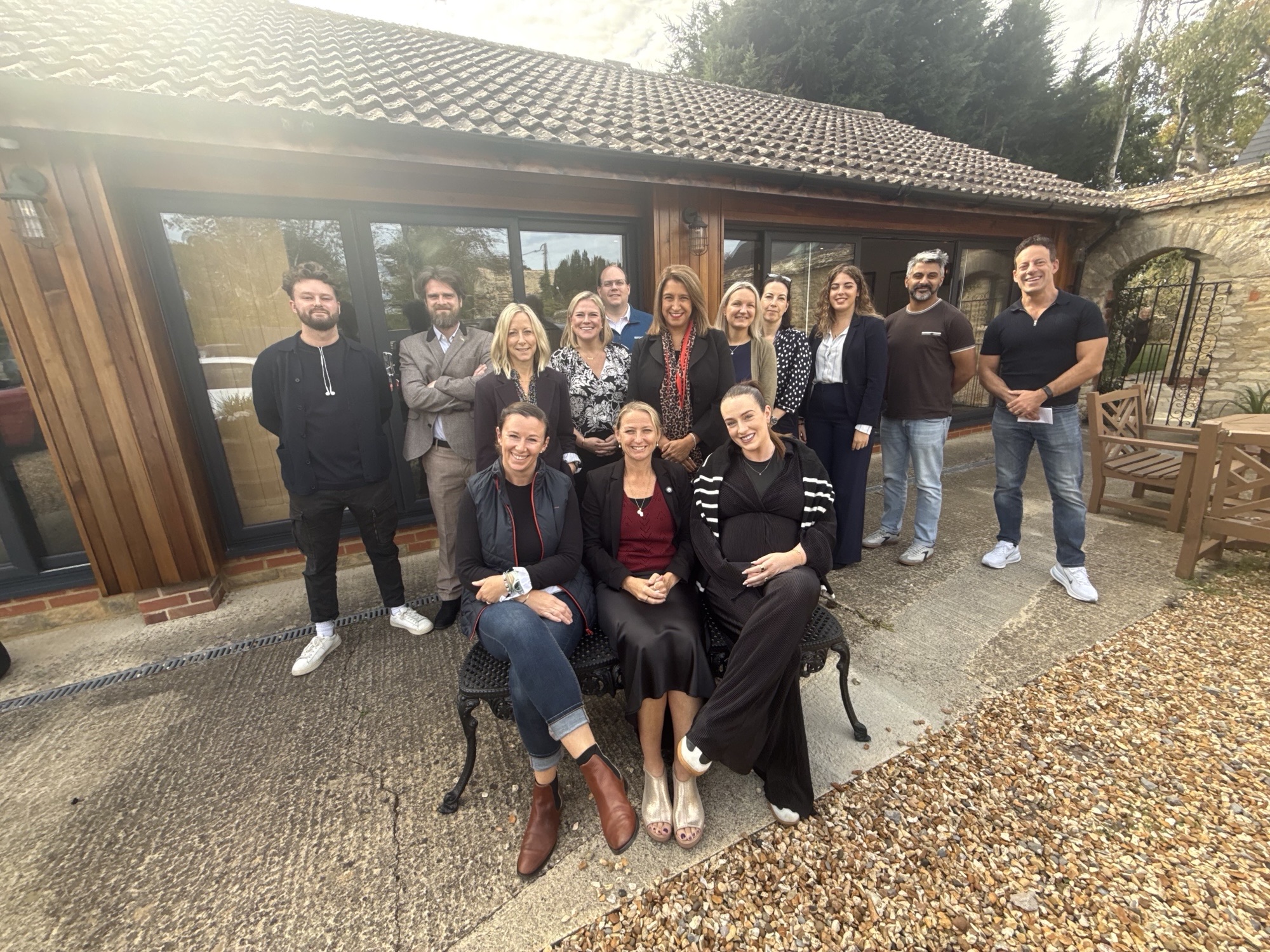
That was the central theme of the latest B4 AI Ecosystem, led by AI strategist and educator Marnie Wills, as a diverse group of leaders gathered at B4 HQ to share how they are currently using AI, where it is already delivering value and, importantly, where the frustrations and risks remain.

Recruitment, law, charities, technology, transport, education and creative businesses were all represented around the table, with levels of AI adoption varying considerably. Some are already experimenting with agents and sophisticated workflows; others are deliberately moving more cautiously. That difference was precisely what made the conversation valuable.

AI is already changing the working day

The session began not with theory, but with a simple question: what is AI already doing well for you that it couldn’t do six or twelve months ago?

Emma from Response highlighted AI meeting notes as something that has transformed the way she works, even changing the way she speaks during meetings to ensure actions are clearly identified and captured.

For Response, the bigger opportunity lies in impact reporting: taking the significant amount of information generated across the charity and using AI to help demonstrate the relationship between its work and the outcomes achieved for the people it supports.

Nicola from Response echoed the point. AI is already helping bring together information for bids, contracts and strategy work that might previously have taken weeks. The next challenge is connecting large quantities of operational data with organisational strategy and demonstrable impact.

It is an issue likely to resonate across the charity sector: organisations often have plenty of data, but turning it into evidence, insight and compelling stories of impact is considerably harder.

Recruitment, law and the challenge of context

Kelly Sullivan of Maman Consulting described extensive use of AI within recruitment, from social media and content creation to improving job descriptions.

But recruitment also highlighted one of AI’s continuing weaknesses. Whether assessing CVs, matching candidates or interpreting a job specification, simply providing AI with a document is not necessarily enough. It also needs the context and human expertise surrounding that document.

The discussion repeatedly returned to what Marnie describes as the human-in-the-loop model: effectively 20:60:20. Human expertise and context at the beginning, AI carrying much of the workload in the middle, followed by human scrutiny, judgement and refinement at the end.

Will Richmond-Coggan of Freeths and Eugenia from Gardner Leader both discussed the increasing use of AI within legal services, where specialist platforms can support research, drafting and document analysis.

Eugenia described an example involving a large litigation matter where AI was asked to search numerous witness statements and other documents. It occasionally identified information as appearing in documents where, on checking, it simply wasn’t there.

It was a useful reminder of one of the recurring themes of the morning: AI output is not automatically fact.

From conversation to action

The biggest shift explored during the session was from conversational AI to agentic AI.

Most of us have become familiar with asking AI a question and receiving an answer. An agent potentially goes further. Instead of producing something which is then manually copied into another system, an agent can increasingly be given a goal, access permitted information and tools, and carry out a series of steps towards an outcome.

Marnie illustrated the difference with cars. A basic AI chat is the equivalent of an old Land Rover: perfectly capable of getting you somewhere, but requiring you to operate everything yourself. Projects and customised AI environments add power steering, electric windows and cruise control. Agents take the analogy towards the driverless car: you define the destination and the system works out many of the steps required to get there.

For businesses, that represents an important change in thinking. Instead of “Write this email”, the instruction increasingly becomes “Draft the response and put it into my drafts for me to review.”

Instead of “Summarise these meeting notes”, it might become “Retrieve the meeting notes, identify the actions, create the follow-up document and prepare the appropriate communications.”

The distinction sounds small. Operationally, it could be enormous.

Stop copying and pasting

One of the simplest lessons from the session was also one of the most practical. Businesses have spent the first few years of generative AI copying and pasting: copy an email into AI, generate a response and copy it back; upload a report, ask for a summary and copy the summary into another document.

The emerging model is about connecting AI securely to the tools and information organisations already use, allowing it to retrieve relevant information and, where appropriate, take controlled actions.

That brought the conversation naturally to connectors, permissions and security.

Just because you can connect it doesn’t mean you should

Some of the most valuable discussion of the morning centred on data. For charities such as Response, Oxfordshire Youth and Sobell House, information can include highly sensitive personal data. For solicitors, client confidentiality is fundamental. For recruiters, CVs contain personal information.

For every organisation in the room, therefore, the question isn’t simply “Can AI access this?” but “Should AI access this, under what circumstances, and with what controls?”

The group discussed restricting permissions, separating sensitive datasets, anonymising information where appropriate, using approved business systems rather than personal accounts and ensuring humans remain responsible for actions such as sending communications or publishing information.

The principle of least privilege is particularly relevant: an AI tool should have access only to the information and systems necessary to complete its authorised task. Human approval also remains crucial.

Marnie shared her own experience of experimenting with an AI assistant that sent an email when she hadn’t intended it to. A relatively harmless example, but a useful illustration of why organisations need clear guardrails before moving from AI that suggests to AI that acts.

AI scepticism belongs in the conversation

Not everyone around the table approached AI with the same enthusiasm, and that was important. The discussion included concerns about cyber security, environmental impact, employment, creative professions and younger people’s attitudes towards AI.

The objective shouldn’t simply be to deploy more AI. It should be to use AI where it creates genuine value while understanding the implications for people, customers and data.

For creative businesses in particular, the opportunity may not necessarily be to replace creative work with AI, but to remove repetitive administrative processes and give talented people more time to do the work for which their judgement and creativity matter most.
IMG 9202Turn repeatable work into a skill

Another practical concept explored was identifying processes that happen repeatedly: writing LinkedIn posts in the same tone, formatting CVs into a house style, producing meeting summaries, creating proposals, preparing newsletters or analysing recurring reports.

If someone repeatedly gives AI broadly the same instructions, that process may be a candidate for turning into a reusable AI workflow or “skill”.

One participant had spent considerable time teaching AI to produce content in exactly the tone and format required. Rather than keeping that knowledge locked inside one person’s conversation with AI, the opportunity is to turn the process into something reusable by colleagues.

That raises a much bigger strategic question for businesses: how much organisational knowledge currently exists only in people’s heads, and how much of it could be captured?

AI potentially provides a new way of turning individual expertise into organisational capability.

The opportunity is bigger than saving time

Perhaps the most important message from the session was that the AI business case cannot simply be measured in hours saved.

Time saving matters, particularly for smaller organisations and charities where resources are stretched. But the larger opportunity may be whether AI can improve decisions, demonstrate impact, improve customer experience, uncover opportunities hidden inside existing data, package expertise into new services or give employees more time to do the things humans are particularly good at.

Salim from Storm Internet raised exactly this opportunity. Having explored AI extensively within his own organisation, the question is no longer simply how Storm can benefit internally, but whether that learning can eventually be packaged to help its customers.

Using AI well could itself become expertise worth selling.

People remain at the centre

For all the discussion about agents, automation, connectors and rapidly improving technology, the morning repeatedly came back to people.

AI needs context, expertise and boundaries, and it needs someone capable of deciding whether the output is actually any good.

The businesses likely to benefit most may therefore not be those that simply buy the most AI tools. They may be those that understand their processes and data, invest in their people and become deliberate about where AI belongs, and where it doesn’t.

Policies and governance will need to evolve just as quickly. Several participants acknowledged that their AI policies can feel out of date almost as soon as they are written. Governance therefore shouldn’t be regarded as a document produced once and filed away; it needs to become an ongoing management discipline.

From prompting to delegating

Marnie finished the session with a simple observation: “You came in prompting. You’re leaving delegating.”

It neatly captured the morning. The first chapter of generative AI taught us how to have conversations with machines. The next is asking businesses to decide what they are comfortable allowing those machines to do.

That requires more than clever prompts. It requires strategy, permissions, governance, training, human judgement and, perhaps most importantly, a clear understanding of the outcome an organisation is actually trying to achieve.

The technology will continue to change. The challenge for leaders is making sure their organisations learn quickly enough to change with it, without losing sight of the people, expertise and values that make their organisations worth enhancing in the first place.

Continue your AI journey with B4

Download the slides
Marnie has kindly made the slides from this AI Ecosystem available to the B4 community. VIEW THE PRESENTATION

Join the next B4 AI Ecosystem
B4 Members are invited to join Marnie and fellow members for our next AI Ecosystem on 3rd December 2026. FIND OUT MORE & BOOK

AI Strategy in Practice: The Leadership Intensive
Go deeper with Marnie at this paid 2.5-hour workshop on 17th November 2026, helping leaders turn AI opportunity into a practical 90-day strategy. FIND OUT MORE & BOOK

Back to news

From Prompting to Delegating: The Next Chapter for AI in Business

24th Sep 2026
IMG 9207
Related Company: Business With AI Strategist

From Prompting to Delegating: The Next Chapter for AI in Business

  • Theme: the first phase of generative AI was prompting. The next is delegating. You gave AI a goal, and it takes the steps towards it.
  • Room: leaders from recruitment, law, charities, tech, transport, education and creative businesses, with very mixed levels of AI adoption.
  • Chatbot vs agent: your Land Rover to driverless car analogy. A chatbot is question → answer. An agent is goal → plan → action → result → adjustment.
  • Stop copy-pasting: connect AI to the tools you already use so it retrieves what it needs, instead of you feeding it.
  • Human in the loop (20:60:20): human context first, AI does the middle 60%, human judgement finishes it. The legal example showed why: AI cited information that wasn’t in the documents.
  • Safety: just because you can connect it doesn’t mean you should. Use least privilege, human approval before anything is sent, business accounts only, and keep a log.
  • Turn repeatable work into a skill: capture one person’s know-how so the whole team can use it.
  • The business case is bigger than hours saved: capacity, quality, decisions, impact reporting and packaging expertise into services.
  • Governance is ongoing: policies go out of date fast, so treat governance as a management habit, not a filed document.
  • Next: AI Ecosystem on 3 Dec FIND OUT MORE & BOOK , and the Leadership Intensive workshop on 17 Nov FIND OUT MORE & BOOK
  • Download the slides
    Marnie has kindly made the slides from this AI Ecosystem available to the B4 community. VIEW THE PRESENTATION

The latest B4 AI Ecosystem brought business and charity leaders together to explore a significant shift in the way organisations are using artificial intelligence: moving beyond asking AI questions and beginning to delegate meaningful work to it.

If the first phase of generative AI was about prompting, the next may well be about delegating.

That was the central theme of the latest B4 AI Ecosystem, led by AI strategist and educator Marnie Wills, as a diverse group of leaders gathered at B4 HQ to share how they are currently using AI, where it is already delivering value and, importantly, where the frustrations and risks remain.

Recruitment, law, charities, technology, transport, education and creative businesses were all represented around the table, with levels of AI adoption varying considerably. Some are already experimenting with agents and sophisticated workflows; others are deliberately moving more cautiously. That difference was precisely what made the conversation valuable.

AI is already changing the working day

The session began not with theory, but with a simple question: what is AI already doing well for you that it couldn’t do six or twelve months ago?

Emma from Response highlighted AI meeting notes as something that has transformed the way she works, even changing the way she speaks during meetings to ensure actions are clearly identified and captured.

For Response, the bigger opportunity lies in impact reporting: taking the significant amount of information generated across the charity and using AI to help demonstrate the relationship between its work and the outcomes achieved for the people it supports.

Nicola from Response echoed the point. AI is already helping bring together information for bids, contracts and strategy work that might previously have taken weeks. The next challenge is connecting large quantities of operational data with organisational strategy and demonstrable impact.

It is an issue likely to resonate across the charity sector: organisations often have plenty of data, but turning it into evidence, insight and compelling stories of impact is considerably harder.

Recruitment, law and the challenge of context

Kelly Sullivan of Maman Consulting described extensive use of AI within recruitment, from social media and content creation to improving job descriptions.

But recruitment also highlighted one of AI’s continuing weaknesses. Whether assessing CVs, matching candidates or interpreting a job specification, simply providing AI with a document is not necessarily enough. It also needs the context and human expertise surrounding that document.

The discussion repeatedly returned to what Marnie describes as the human-in-the-loop model: effectively 20:60:20. Human expertise and context at the beginning, AI carrying much of the workload in the middle, followed by human scrutiny, judgement and refinement at the end.

Will Richmond-Coggan of Freeths and Eugenia from Gardner Leader both discussed the increasing use of AI within legal services, where specialist platforms can support research, drafting and document analysis.

Eugenia described an example involving a large litigation matter where AI was asked to search numerous witness statements and other documents. It occasionally identified information as appearing in documents where, on checking, it simply wasn’t there.

It was a useful reminder of one of the recurring themes of the morning: AI output is not automatically fact.

From conversation to action

The biggest shift explored during the session was from conversational AI to agentic AI.

Most of us have become familiar with asking AI a question and receiving an answer. An agent potentially goes further. Instead of producing something which is then manually copied into another system, an agent can increasingly be given a goal, access permitted information and tools, and carry out a series of steps towards an outcome.

Marnie illustrated the difference with cars. A basic AI chat is the equivalent of an old Land Rover: perfectly capable of getting you somewhere, but requiring you to operate everything yourself. Projects and customised AI environments add power steering, electric windows and cruise control. Agents take the analogy towards the driverless car: you define the destination and the system works out many of the steps required to get there.

For businesses, that represents an important change in thinking. Instead of “Write this email”, the instruction increasingly becomes “Draft the response and put it into my drafts for me to review.”

Instead of “Summarise these meeting notes”, it might become “Retrieve the meeting notes, identify the actions, create the follow-up document and prepare the appropriate communications.”

The distinction sounds small. Operationally, it could be enormous.

Stop copying and pasting

One of the simplest lessons from the session was also one of the most practical. Businesses have spent the first few years of generative AI copying and pasting: copy an email into AI, generate a response and copy it back; upload a report, ask for a summary and copy the summary into another document.

The emerging model is about connecting AI securely to the tools and information organisations already use, allowing it to retrieve relevant information and, where appropriate, take controlled actions.

That brought the conversation naturally to connectors, permissions and security.

Just because you can connect it doesn’t mean you should

Some of the most valuable discussion of the morning centred on data. For charities such as Response, Oxfordshire Youth and Sobell House, information can include highly sensitive personal data. For solicitors, client confidentiality is fundamental. For recruiters, CVs contain personal information.

For every organisation in the room, therefore, the question isn’t simply “Can AI access this?” but “Should AI access this, under what circumstances, and with what controls?”

The group discussed restricting permissions, separating sensitive datasets, anonymising information where appropriate, using approved business systems rather than personal accounts and ensuring humans remain responsible for actions such as sending communications or publishing information.

The principle of least privilege is particularly relevant: an AI tool should have access only to the information and systems necessary to complete its authorised task. Human approval also remains crucial.

Marnie shared her own experience of experimenting with an AI assistant that sent an email when she hadn’t intended it to. A relatively harmless example, but a useful illustration of why organisations need clear guardrails before moving from AI that suggests to AI that acts.

AI scepticism belongs in the conversation

Not everyone around the table approached AI with the same enthusiasm, and that was important. The discussion included concerns about cyber security, environmental impact, employment, creative professions and younger people’s attitudes towards AI.

The objective shouldn’t simply be to deploy more AI. It should be to use AI where it creates genuine value while understanding the implications for people, customers and data.

For creative businesses in particular, the opportunity may not necessarily be to replace creative work with AI, but to remove repetitive administrative processes and give talented people more time to do the work for which their judgement and creativity matter most.

IMG 9202Turn repeatable work into a skill

Another practical concept explored was identifying processes that happen repeatedly: writing LinkedIn posts in the same tone, formatting CVs into a house style, producing meeting summaries, creating proposals, preparing newsletters or analysing recurring reports.

If someone repeatedly gives AI broadly the same instructions, that process may be a candidate for turning into a reusable AI workflow or “skill”.

One participant had spent considerable time teaching AI to produce content in exactly the tone and format required. Rather than keeping that knowledge locked inside one person’s conversation with AI, the opportunity is to turn the process into something reusable by colleagues.

That raises a much bigger strategic question for businesses: how much organisational knowledge currently exists only in people’s heads, and how much of it could be captured?

AI potentially provides a new way of turning individual expertise into organisational capability.

The opportunity is bigger than saving time

Perhaps the most important message from the session was that the AI business case cannot simply be measured in hours saved.

Time saving matters, particularly for smaller organisations and charities where resources are stretched. But the larger opportunity may be whether AI can improve decisions, demonstrate impact, improve customer experience, uncover opportunities hidden inside existing data, package expertise into new services or give employees more time to do the things humans are particularly good at.

Salim from Storm Internet raised exactly this opportunity. Having explored AI extensively within his own organisation, the question is no longer simply how Storm can benefit internally, but whether that learning can eventually be packaged to help its customers.

Using AI well could itself become expertise worth selling.

People remain at the centre

For all the discussion about agents, automation, connectors and rapidly improving technology, the morning repeatedly came back to people.

AI needs context, expertise and boundaries, and it needs someone capable of deciding whether the output is actually any good.

The businesses likely to benefit most may therefore not be those that simply buy the most AI tools. They may be those that understand their processes and data, invest in their people and become deliberate about where AI belongs, and where it doesn’t.

Policies and governance will need to evolve just as quickly. Several participants acknowledged that their AI policies can feel out of date almost as soon as they are written. Governance therefore shouldn’t be regarded as a document produced once and filed away; it needs to become an ongoing management discipline.

From prompting to delegating

Marnie finished the session with a simple observation: “You came in prompting. You’re leaving delegating.”

It neatly captured the morning. The first chapter of generative AI taught us how to have conversations with machines. The next is asking businesses to decide what they are comfortable allowing those machines to do.

That requires more than clever prompts. It requires strategy, permissions, governance, training, human judgement and, perhaps most importantly, a clear understanding of the outcome an organisation is actually trying to achieve.

The technology will continue to change. The challenge for leaders is making sure their organisations learn quickly enough to change with it, without losing sight of the people, expertise and values that make their organisations worth enhancing in the first place.

Continue your AI journey with B4

Download the slides
Marnie has kindly made the slides from this AI Ecosystem available to the B4 community. VIEW THE PRESENTATION

Join the next B4 AI Ecosystem
B4 Members are invited to join Marnie and fellow members for our next AI Ecosystem on 3rd December 2026. FIND OUT MORE & BOOK

AI Strategy in Practice: The Leadership Intensive
Go deeper with Marnie at this paid 2.5-hour workshop on 17th November 2026, helping leaders turn AI opportunity into a practical 90-day strategy. FIND OUT MORE & BOOK

Back to news