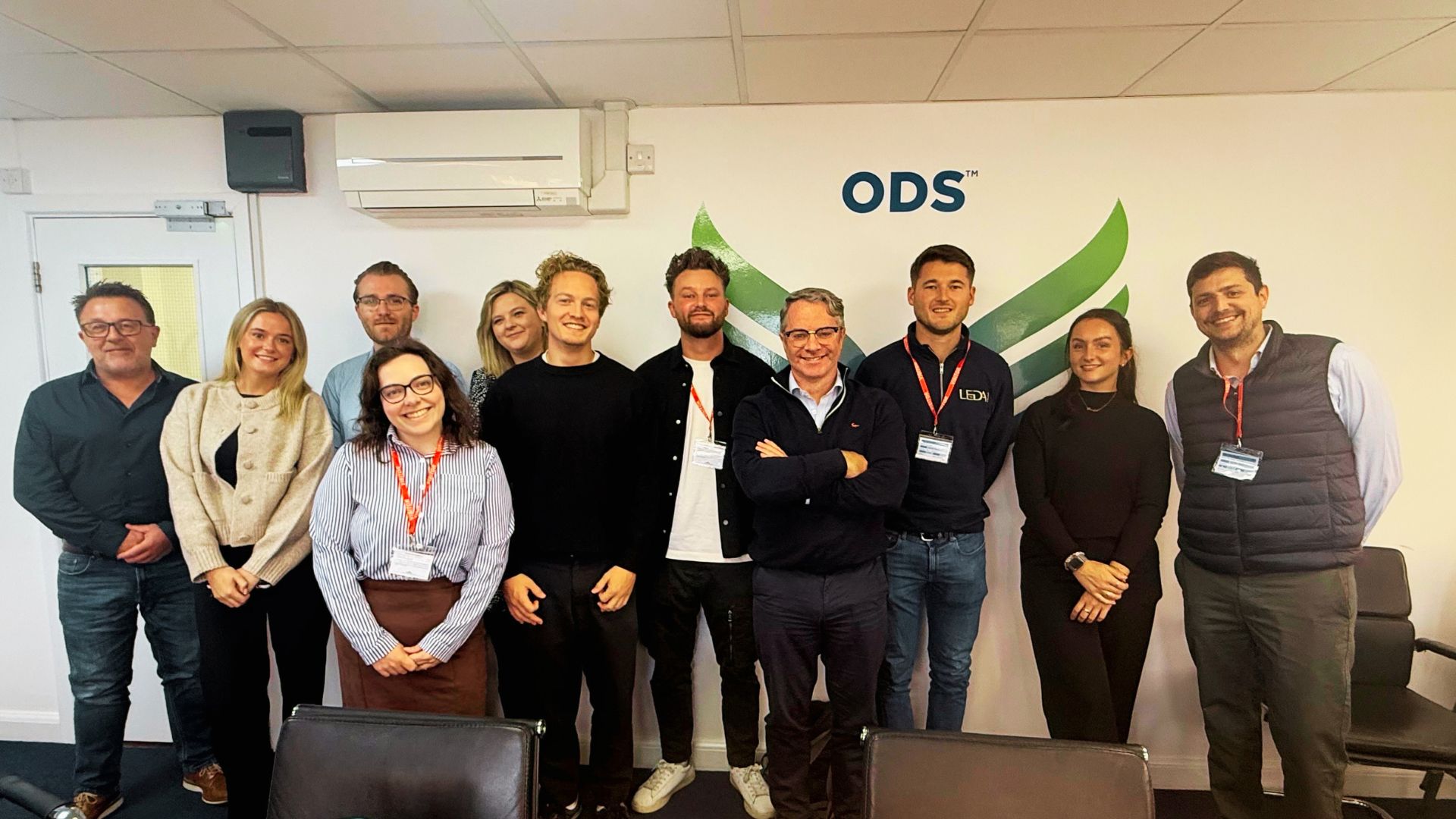
NX members gathered at Oxford Direct Services for a refreshingly candid breakfast conversation with Commercial Director Ben Dudley, exploring what it really takes to build, grow and sustain a successful business.
There was no polished presentation, no lengthy slide deck and, from the outset, Ben Dudley made it clear there would be no hiding from reality either.
“The one thing that hopefully this morning you’ll get is some truth,” he told the room.
It set the tone perfectly for an NX breakfast built around open conversation, honest challenges and practical commercial experience.
Hosted at Oxford Direct Services (ODS), the session brought together a diverse group of young founders, professionals and emerging leaders from businesses spanning property, recruitment, professional services, wellness, technology, creative industries and the charity sector.
Ben, Commercial Director at ODS, began by providing some context on an organisation that is unusual by almost any measure.
A business with a difference
Oxford Direct Services was formed in 2017 as a Local Authority Trading Company, separating a range of operational services from Oxford City Council while remaining council-owned.
Today, ODS delivers a significant range of contracted services for Oxford, including the management of council homes, highways, waste collection, parks, sports grounds, open spaces and cemeteries. Alongside this sits a growing commercial operation, with profits ultimately contributing back to council services.
For Ben, who marked his second anniversary with ODS on the day of the breakfast, that unusual structure creates an equally unusual commercial challenge.
One part of the organisation has a substantial body of contracted work; another needs to compete, innovate and grow.
That has created what Ben described as a “massive cultural conflict” – and much of his role has been about moving the organisation from being predominantly operationally driven towards becoming increasingly customer focused.
That distinction provided the central theme for the morning.
Everything comes back to the customer
Whatever the sector, size or age of a business, Ben argued that commerciality ultimately starts in the same place.
The customer.
“If your business isn’t built around that customer, then your business will fail,” he said.
It sounds simple, but the ensuing discussion demonstrated how many different aspects of a business flow from genuinely understanding who that customer is, what they value and why they buy.
Ben identified five areas he considers when looking commercially at a business: business growth; pricing and margin management; contract portfolio; customer relationships; and operational efficiency.
But none operates independently of the customer.
Even growth, Ben suggested, should be challenged rather than automatically celebrated.
Why do you want to grow? Is there a genuine customer requirement? Is there longevity in the opportunity? Is the business generating sufficient cash?
Growth simply for the sake of making more money, he argued, can be the wrong objective.
Build recurring revenue where you can
One of Ben’s strongest recommendations was to create contracted, recurring or “annuity” income wherever the business model allows it.
ODS’s commercial waste operation, for example, benefits from customers committed through term contracts. That gives the wider business greater visibility over future revenue and provides a foundation from which it can plan.
For an NX audience representing very different industries, the principle was more important than the precise model.
Could a project-based relationship become a retainer? Could a customer be committed for a longer period? Could a one-off transaction develop into an ongoing service?
Recurring income not only creates greater certainty; done well, it allows the relationship between business and customer to deepen.
But keeping that customer, Ben stressed, depends on something deceptively straightforward.
Communication.
When the group suggested that delivering value was the most important ingredient in keeping customers happy, Ben put it second.
Communication came first.
Regardless of the size of the customer, he argued, they need to feel that the business remains interested in them.
ODS has introduced regular, simple customer feedback through its CRM system, giving customers an opportunity to indicate how they feel about the service and opening the door to a conversation when something isn’t right.
The lesson was clear: don’t only communicate when you want to sell something.
“Successful businesses don’t hard sell. They live on their reputation.”
Know your market – properly
Another recurring challenge from Ben was whether those around the table really understood the size and structure of their market.
Not approximately. Properly.
Who are your competitors? How large is the opportunity? What share do you currently have? Which sectors are underrepresented amongst your customers?
Ben illustrated the point using ODS’s waste business, where detailed knowledge of the businesses operating locally, competitors and market share helps inform its commercial strategy.
That same discipline, he argued, applies whether you are running a recruitment company, law firm, accountancy practice, technology company, charity or membership organisation.
For B4 and NX, the discussion moved towards the importance of having a diverse community – not simply growing membership numbers, but ensuring the right mixture of sectors, organisation sizes and perspectives is represented.
For younger businesses in particular, understanding the addressable market can turn ambition into something much more tangible: a strategy.
What is a salesperson actually there to do?
One of the liveliest exchanges followed a discussion about recruiting salespeople.
Ben asked the room for its definition of a salesperson.
Answers ranged from relationship builder and communicator to someone responsible for generating revenue.
Ben disagreed with all of them.
“The definition of a salesperson is to create an opportunity. Full stop.”
The business itself still has to convert that opportunity successfully.
It must have the right pricing, product, service and operational capability. A salesperson cannot compensate indefinitely for a business that cannot deliver what has been promised.
Ben distinguished between the “farmer” – the account manager who nurtures and grows existing relationships – and the “hunter”, whose role is to create new opportunities.
Both can be invaluable, but businesses need to understand which they require and equip them with the information and parameters they need to succeed.
Otherwise the familiar tension between sales and operations quickly emerges: sales promises something the business cannot deliver.
A good salesperson, Ben suggested, knows enough about the organisation to avoid overpromising while still keeping the opportunity alive.
Cash is king – and you are not a bank
If the first half of the breakfast belonged to the customer, the second major theme could be summarised in one word.
Cash.
Ben’s message was unequivocal: businesses should avoid financing their customers wherever possible.
Long payment terms can leave a supplier carrying all the costs of delivering a service well before receiving payment.
“You should not operate a business acting as a bank.”
Where the market and customer relationship allow, Ben encouraged businesses to consider deposits, advance payments, direct debits and other structures which improve working capital.
For smaller and younger businesses especially, cash flow can become a far greater threat than profitability on paper.
The discussion also touched on invoice factoring, work in progress, payment terms and the danger of allowing apparently good customers to gradually erode margin.
Existing relationships shouldn’t automatically mean doing more for less.
If your service is strong and customers value it, Ben argued, businesses should have confidence in their pricing.
Know what you want your business to be
Perhaps one of the most useful exchanges for the younger founders in the room concerned the distinction between a commercial growth business and a lifestyle business.
There is nothing wrong with either.
The mistake is failing to decide which one you are building.
A founder who wants a business that provides an enjoyable living, flexibility and independence does not necessarily need to build a large team or chase relentless growth.
But that business still needs longevity. It needs enough customers, sufficient margin and adequate cash to survive the inevitable peaks and troughs.
Similarly, if the ambition is to scale, the infrastructure has to develop with it without allowing the organisation to become, in Ben’s words, “operationally fat”.
Technology, processes and people all need to support the commercial objective.
The value of an honest room
What made the breakfast particularly valuable was that the discussion wasn’t confined to Ben’s experiences.
Each person around the table was encouraged to identify something positive about their organisation and something that wasn’t working as well.
The challenges were varied: recruitment and retention, changing legislation, AI, cash collection, transitioning from B2C to B2B, winning larger clients, finding time for administration, expanding into new markets and scaling without losing sight of the customer.
There were no attempts to pretend everything was perfect.
And that was exactly the point.
As Ben had said at the beginning, businesses cannot afford to lie to themselves.
Understanding weaknesses, knowing the customer, protecting cash, managing margin and being clear about why you want to grow might not be the most glamorous aspects of entrepreneurship.
But they are the foundations upon which sustainable businesses are built.
For NX, that is precisely why conversations like this matter.
The opportunity to sit around a table with experienced business leaders, ask direct questions, discuss genuine challenges and hear perspectives from peers in completely different industries provides something that cannot easily be replicated in a textbook or online course.
As Ben concluded:
“Customer is the customer that drives everything.”
A simple message – but after more than an hour of honest discussion at ODS, one with considerably more meaning behind it.
NX would like to thank Ben Dudley and the team at Oxford Direct Services for hosting the breakfast and for sharing their time, experience and insights so openly.
We look forward to NX Members attending the next opportunity to share the room with an established leader when Blenheim Palace’s CEO, Dominic Hare, welcomes NX.