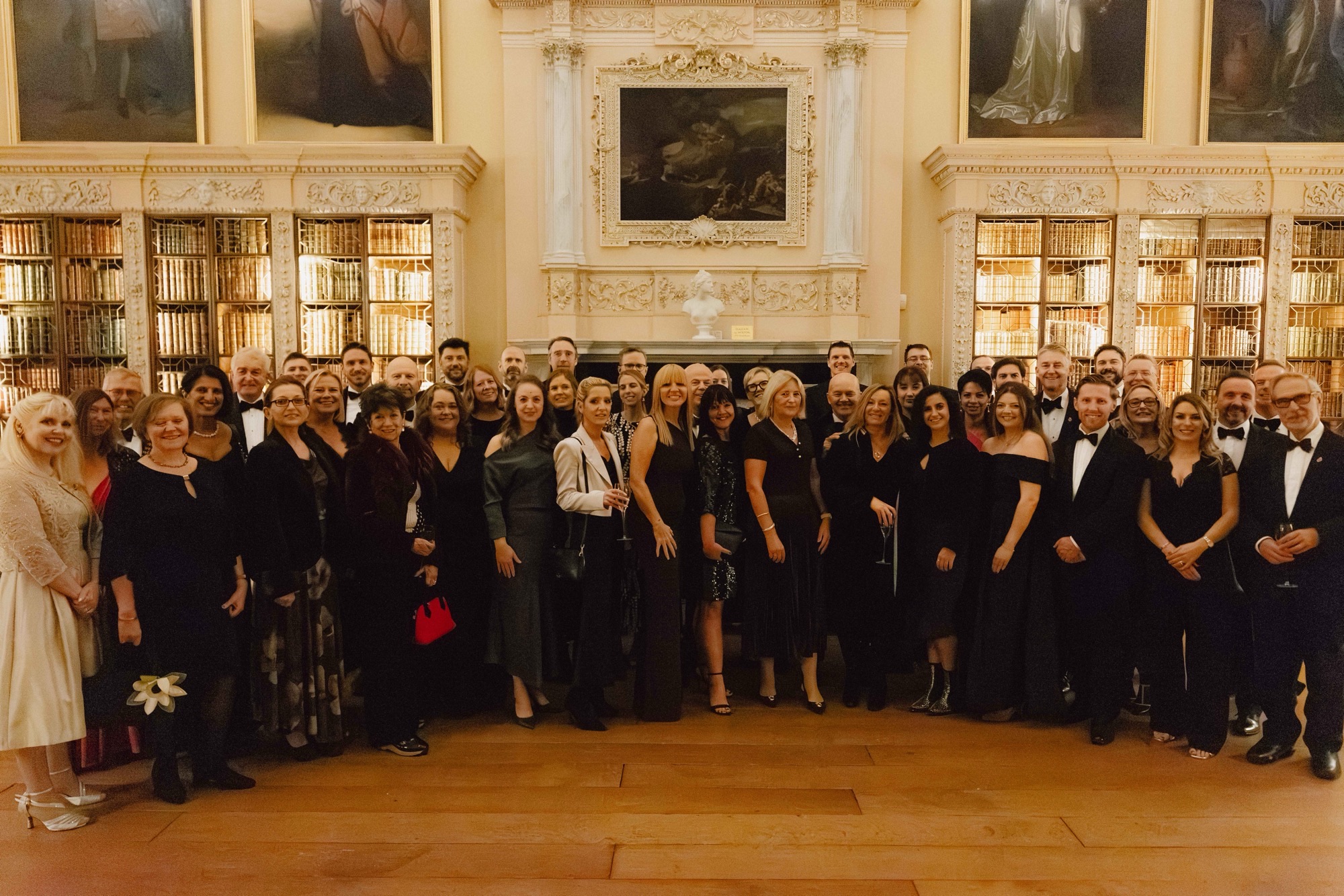
From a small commercial property practice in Oxford to advising on some of the world’s most exciting science and technology developments, Richard Venables has witnessed Oxfordshire’s remarkable transformation first-hand. Speaking in the magnificent Great Hall at Blenheim Palace during B4’s Platinum Dinner on Thursday 29 October, the CBRE Senior Director delivered an insightful, entertaining and thought-provoking assessment of the county’s future – celebrating its extraordinary potential while challenging the business community to ensure that prosperity benefits everyone.
From local surveyor to global opportunities
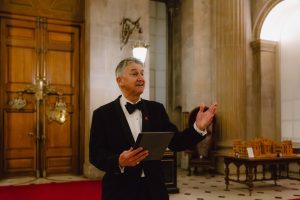 Richard began by reflecting on his own career, which has closely mirrored Oxfordshire’s economic evolution.
Having qualified as a chartered surveyor in London, he returned to Oxfordshire to join James Offen & Partners, a small, family-oriented commercial property practice in Beaumont Street.
One of his first colleagues was Lizzie Young, who remains his PA some 33 years later – a relationship Richard highlighted as an example of the importance of loyalty, continuity and personal connections in business.
Following the firm’s acquisition by Savills, Richard and five colleagues took the bold decision to establish their own practice in 2002. Their business grew alongside Oxfordshire’s emerging science and technology economy, gradually developing specialist expertise in laboratories, life sciences and university spin-outs.
The transformation culminated in the acquisition of VSL & Partners by global property adviser CBRE, opening the door to an entirely different scale of opportunity.
Richard entertained guests with stories of moving between modest commercial property assignments in Didcot and major international pitches in central London, illustrating just how dramatically his professional world had changed.
But his underlying point was clear: Oxfordshire itself has undergone an equally extraordinary transformation.
 Oxfordshire is now a global marketplace
Richard described how Oxfordshire has become an internationally recognised centre for innovation, attracting businesses and investment across biotechnology, artificial intelligence, autonomous vehicles and quantum computing.
He spoke about working with San Francisco-based companies looking to establish or expand their presence in Oxford, alongside growing international interest in the county’s research capabilities.
The strength of Oxfordshire’s innovation economy, he argued, extends well beyond the city itself.
From Harwell and Culham to Motorsport Valley and the wider science and technology ecosystem, the region possesses a remarkable concentration of knowledge, expertise and commercial opportunity.
Richard also highlighted the importance of the Oxford Innovation Engine reports in recognising the scale of this potential and establishing a blueprint for growth.
His message was that Oxfordshire is no longer simply competing with other UK regions. It is operating on a global stage.
The uncomfortable reality behind Oxfordshire’s success
Despite his enthusiasm for the region’s economic prospects, Richard was equally passionate about the significant inequalities that exist alongside its prosperity.
Referencing the Oxfordshire Uncovered report, published by Oxfordshire Community Foundation, he highlighted the contrast between one of the country’s most economically successful counties and the communities within it experiencing deprivation, poor health outcomes and limited opportunities.
He pointed to the stark differences in life expectancy between neighbouring communities, alongside child poverty and wider social challenges.
For Richard, these inequalities are not simply unfortunate consequences of economic growth. They are challenges that businesses, institutions and communities have a collective responsibility to address.
He made the important observation that Oxfordshire’s economic wellbeing is intrinsically linked to its social and cultural wellbeing.
A successful innovation economy, in other words, cannot be measured solely by investment, company valuations or the number of new laboratories. It must also be judged by the opportunities it creates for the people who live here.
A new chapter for Oxford’s innovation economy
Richard highlighted several developments that could fundamentally reshape Oxfordshire over the coming decade.
Among them was the University of Oxford’s recently announced Equinox 2035 initiative, with ambitions to create 20 new unicorn businesses, six globally scaling companies and attract three major international corporates.
Of particular interest to Richard was the proposed founders’ pledge, through which successful spin-outs could contribute to a fund supporting the wider Oxford community.
He welcomed the potential for Oxford’s commercial success to generate lasting benefits for communities that have not always shared in the region’s prosperity.
Richard also discussed the scale of the Ellison Institute of Technology development at Littlemore, alongside the potential reopening of the Cowley branch railway line to passenger services.
Both, he suggested, could have a profound impact on Oxford’s economy and the surrounding communities.
Looking further ahead, he identified the regeneration of Oxford city centre and the railway station area as another major opportunity, particularly as growing technology businesses seek locations capable of attracting talent from across the country.
However, he cautioned that growth must be accompanied by improvements in infrastructure, affordability and connectivity if Oxfordshire is to retain more of the successful companies it creates.
 The five Ps holding Oxfordshire back
With characteristic humour, Richard summarised the challenges facing the county through what he called his five Ps:
Power, Planning, Politics, Potholes and Poverty.
He even suggested adding a sixth – Poo – in recognition of the pressure on the region’s utilities and wastewater infrastructure.
Behind the humour was a serious message.
Oxfordshire possesses exceptional intellectual capital and entrepreneurial ambition, but significant barriers remain to translating that potential into sustainable economic growth.
From infrastructure constraints and housing affordability to planning delays and social inequality, these challenges will require coordinated action rather than isolated initiatives.
Making things happen: the importance of business leadership
One of the most powerful themes of Richard’s speech was his belief that individuals and organisations must take an active role in shaping their communities.
Drawing on his involvement with organisations including Experience Oxfordshire, Active Oxfordshire and Oxfordshire Youth, he explained that his motivation has always been to make a difference rather than simply observe the challenges around him.
He shared a memorable observation from a recent event: there are people who make things happen, people who watch things happen and people who wonder what happened.
Richard made it clear which group he believes business leaders should belong to.
He also praised B4’s RAISE initiative, recognising the importance of businesses working collectively to support local charities and communities.
With more than £100,000 raised through RAISE since 2024, he described the programme as an example of what can be achieved when businesses come together with a shared purpose.
He also referenced the work of Didcot Powerhouse as further evidence of the positive impact that coordinated business-led community initiatives can deliver.
 Investing in the next generation
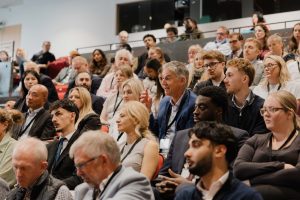
Richard reserved particular praise for NX, the under-35 professional network founded by Edward Rosser.
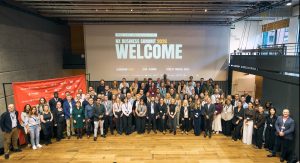
Having attended the recent NX Summit at Keble College, he congratulated Edward on the initiative, describing the event, its speakers and the energy of the young professionals attending in glowing terms.
One message from the Summit had particularly resonated with him: the importance of curiosity.
But Richard challenged established business leaders to be equally curious about younger generations – their ambitions, perspectives and the opportunities they need.
He spoke passionately about the transformational impact of work experience, encouraging employers to open their doors to young people and give them an insight into professional life.
For someone who has spent decades witnessing Oxfordshire’s economic transformation, the importance of creating opportunities for the next generation was clearly a subject close to his heart.
His message was that developing young talent is not simply about addressing future recruitment needs. It is about helping young people build confidence, discover possibilities and realise their potential.
 If Oxfordshire can’t lead the way, who can?
Richard concluded by reflecting on the challenges facing the wider UK economy and the difficult decisions required to deliver meaningful growth.
Yet despite the obstacles, his optimism for Oxfordshire remained undiminished.
With the University of Oxford, its extraordinary research capabilities, its growing international reputation and an increasingly connected business community, he believes the county has the ingredients to demonstrate what successful, inclusive economic growth can look like.
His closing challenge was simple:
“If Oxford can’t do it, then who can?”
It was a fitting conclusion to an evening that celebrated not only Oxfordshire’s remarkable achievements, but also the responsibilities that come with success.
Richard also recognised and congratulated B4 and its members for the important role they play in bringing Oxfordshire’s business community together, creating meaningful connections and demonstrating what can be achieved through collaboration and a shared commitment to the county.
His message reinforced a principle that sits at the heart of B4: strong businesses and strong communities are not competing ambitions. They depend on one another.
And if Oxfordshire is to fulfil its extraordinary potential, it will take more than innovation, investment and infrastructure.
It will take people and organisations prepared to make things happen.
With Special Thanks
 A very special thank you to the team at Blenheim Palace including Heather Carter (Managing Director, Heritage Businesses), Megan Carter (Head of People), Minnie Fledderus-Diaconu (Senior Sales Manager) and Emma Rogers (Sales and Events Manager), together with Michael, Clara, Natalie and the rest of the impeccable Blenheim Palace team for their wonderful hospitality, exceptional meal and attention to detail throughout the evening.
Our sincere thanks also go to Tina Rosser for her outstanding work in organising such a wonderful event and for creating the incredible table centrepieces, which added a particularly special Halloween touch to the magnificent surroundings of the Great Hall.
The evening also provided an opportunity to welcome Katy Lockett, who has recently joined the B4 team. We are delighted to have Katy on board and look forward to the contribution she will make to the B4 community.
Finally, thank you to all our Platinum Members and guests for joining us and helping make the evening such a memorable occasion. It is the people, relationships and shared commitment to Oxfordshire that make the B4 community so special.
_______________________________________________________________________________
 About Richard Venables
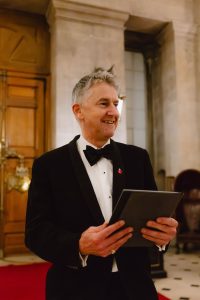
Richard Venables is a Chartered Surveyor with extensive experience advising on commercial property in the science and technology markets in Oxfordshire, having worked in the region for over 30 years.
He is a Senior Director in the Oxford office of CBRE, the global property adviser, following its acquisition of VSL & Partners, which Richard co-founded approximately 25 years ago.
Richard has played an active role in the region’s economic development, serving as a Board Member of the Oxford Local Enterprise Partnership (2014–2018). He is Vice Chair of the Oxford Economic Growth Steering Group, a member of the Oxford Strategic Partnership and Vice President of the Oxford Civic Society.
Richard served as High Sheriff of Oxfordshire in 2018/19 and is a Deputy Lieutenant of Oxfordshire. In 2022, he was awarded an Honorary Doctorate by Oxford Brookes University in recognition of his services to economic development and the community.
Outside his professional life, Richard has a longstanding passion for supporting young people, sport and cultural activities. He served as a Trustee of Oxfordshire Youth (2019–2022), where he continues to support the organisation as an Ambassador, and has also been involved with Active Oxfordshire and Experience Oxfordshire.
His commitment to Oxfordshire extends well beyond his professional work, reflecting a belief that economic prosperity, community wellbeing and opportunities for future generations must develop together.