Resilience in an Uncertain World
The Conversation
There was a time when resilience meant weathering a crisis and returning to business as usual. Today, leaders know there may be no “normal” to return to.
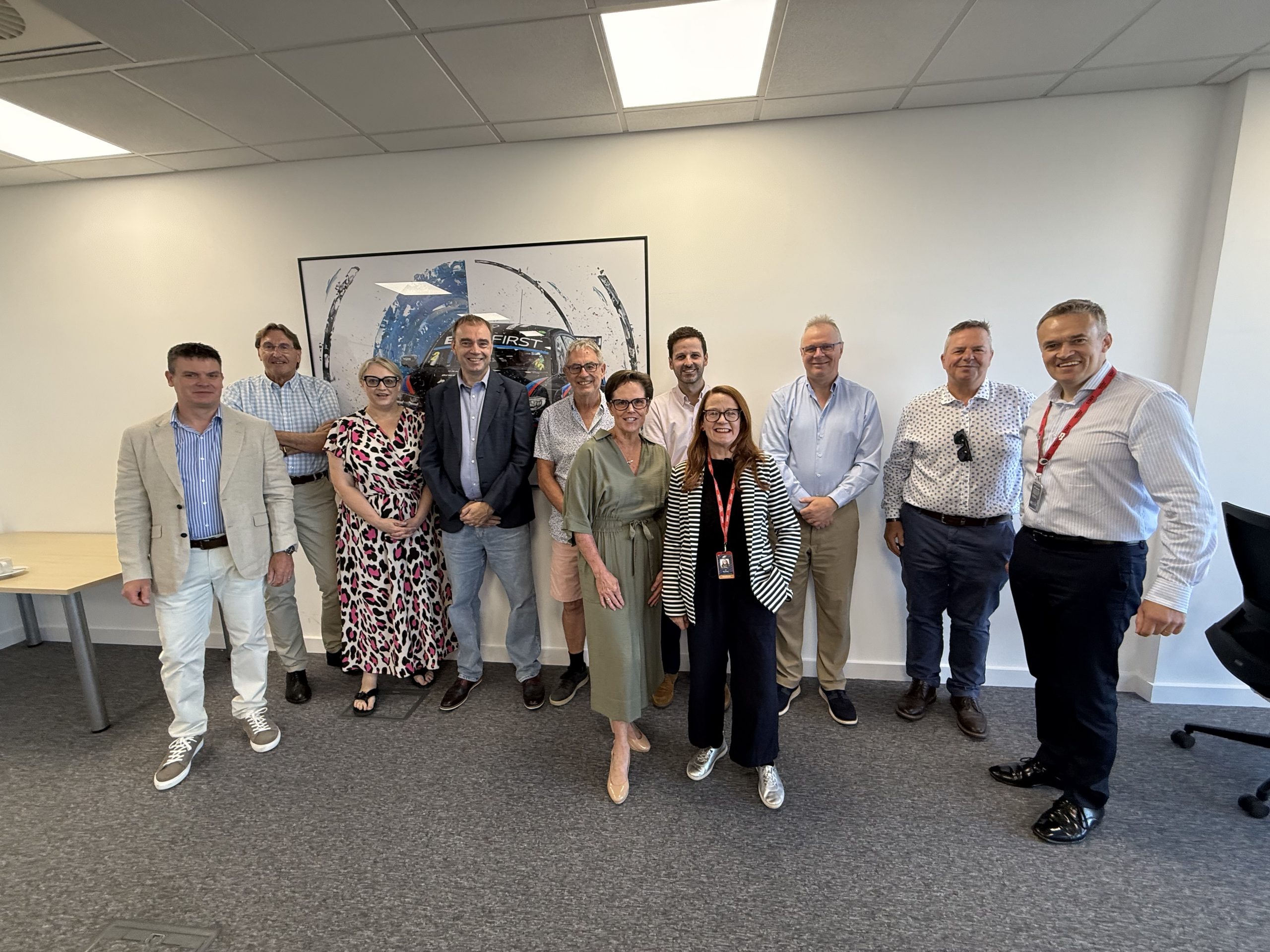
At the latest Corum Six, hosted by Phil Lawrie, Chief Executive of the iconic Silverstone Museum, senior business leaders from across Oxfordshire came together to explore what resilience really means in an era shaped by geopolitical uncertainty, economic volatility, rapid technological change and shifting customer expectations.
As with every Corum Six, there were no presentations, no slides and no sales pitches. Instead, the discussion was driven by the collective experience of the room, creating an open, honest exchange of ideas that challenged assumptions and encouraged fresh thinking.
One theme emerged almost immediately: resilience is no longer about simply surviving disruption. It is about creating organisations – and leaders – that can adapt, evolve and even strengthen because of it.
Reflecting afterwards, Dominic Hare, Chief Executive Officer of Blenheim Palace, captured the atmosphere perfectly:
“Always uplifting and reaffirming to learn from such wise and varied people.”
The Insights
Resilience is built long before you need it
The strongest organisations don’t suddenly become resilient when crisis strikes. They have already invested in culture, communication, trust and relationships.
Members reflected on the lessons of recent years, from the pandemic to today’s geopolitical uncertainty, concluding that resilience isn’t created in the moment. It is the result of consistent leadership, clear values and an environment where people feel informed, trusted and able to respond.
One particularly thought-provoking concept discussed was the difference between resilience and antifragility – the idea that the very best organisations don’t simply recover from disruption, they become stronger because of it. Rather than resisting change, they use uncertainty as a catalyst for improvement.
The best leaders ask better questions
A recurring theme was that modern leadership is becoming less about having the right answers and more about asking the right questions.
In an environment where information changes rapidly and certainty is increasingly elusive, curiosity, humility and thoughtful decision-making become competitive advantages. Several members observed that one of the greatest challenges facing leaders today is creating enough space to think.
The pressure to respond instantly can often produce poorer decisions than taking time to reflect, gather different perspectives and challenge assumptions before acting.
Equally important was the role of communication. During periods of uncertainty, people rarely expect leaders to know everything. What they do expect is honesty, visibility and regular communication. Confidence is built through openness, not certainty.
Learning from those who reinvent themselves
The conversation explored organisations that have demonstrated remarkable resilience by embracing change rather than defending the past.
Examples such as Netflix and Lego illustrated businesses willing to reinvent themselves before circumstances forced them to do so. Their success was contrasted with organisations such as Blockbuster, whose inability to adapt became a powerful reminder that yesterday’s strengths can quickly become tomorrow’s vulnerabilities.
The discussion reinforced a simple but important point: resilience isn’t about protecting what already exists. It is about recognising when the world has changed and having the courage to evolve with it.
AI won’t replace leadership
Artificial Intelligence naturally formed part of the conversation, but the discussion quickly moved beyond the technology itself.
Members explored both the opportunities and limitations of AI, recognising its enormous potential to improve productivity, support analysis and accelerate decision-making. At the same time, there was broad agreement that judgement, ethics, context and human relationships remain firmly in the domain of leadership.
Perhaps the most significant observation was that AI is no longer simply an operational issue. Increasingly, it is a boardroom conversation, requiring leaders to think strategically about governance, culture, risk and opportunity rather than viewing it purely as another technology project.
The Takeaways
At the close of every Corum Six, members are invited to reflect on a series of questions. Their answers often prove to be among the most memorable moments of the discussion.
What do you do to maintain your own resilience?
The responses were refreshingly personal.
Walking. Cycling. Exercise. Coaching. Time with family. Conversations with trusted colleagues. Creating space away from work to think more clearly.
While the activities varied, the conclusion was consistent: resilient organisations are led by resilient people, and personal wellbeing is not a luxury – it is part of effective leadership.
What advice would you give to a future leader?
The room offered a wealth of advice that will resonate strongly with members of NX, B4’s community for emerging business leaders.
Stay curious. Listen more than you speak. Keep learning. Seek different perspectives. Don’t confuse confidence with certainty. Remember that leadership is ultimately about people, not processes.
It was a fitting reminder that one of B4 and Corum’s greatest strengths is bringing together established leaders willing to share their experience with the next generation.
Reflecting on his first Corum Six, Jo Bussey, Director of Development & Fundraising at Silverstone Museum, commented:
“Great to meet such a variety of businesses in my first Corum Six meeting and such a supportive environment for everyone too.”
Which organisations demonstrate resilience?
The examples ranged from global brands to businesses much closer to home, but the qualities admired were remarkably consistent.
The organisations that continue to thrive are those that learn continuously, adapt early, communicate openly and are prepared to challenge their own assumptions before circumstances force them to.
Why Corum Matters
One observation perhaps captured the spirit of the morning better than any other.
At a time when Artificial Intelligence can summarise meetings, generate strategies and answer questions in seconds, the real value lies elsewhere.
It lies in the challenge from a peer. The unexpected perspective. The trust built around a table. The conversation that continues long after the meeting has finished. Those moments cannot be generated by technology.
They happen when experienced leaders come together, share honestly and think collectively about the challenges that matter most.
That is precisely why Corum exists.
The feedback received after the event reinforced this point.
Samantha Newton, Founder & Principal HR & ER Consultant at Magenta HR, reflected:
“I thoroughly enjoyed the discussion and found it incredibly valuable. It was great to meet such an impressive group of business owners and hear the different perspectives around the table.”
Meanwhile, Peter McLintock, Business Development Ambassador at Mills & Reeve, highlighted both the discussion and the venue:
“Really enjoyable and interesting from start to finish. Silverstone and the museum are such inspirational places and showcase the best of British.”
Looking Ahead
The conversation continues at the next Corum Six in August with Robert Pilkington, Joint CEO of Ebbon Group, before members meet with Ben Dudley, Managing Director of Oxford Direct Services, in September.
Each session tackles a different leadership challenge, but the principle remains unchanged: bringing together senior decision-makers to have meaningful conversations that lead to better decisions.
Corum. Better conversations. Better decisions. In person.
Who Was Present?
Host
- Phil Lawrie, Chief Executive Officer, Silverstone Museum
Members
- John Hoy, Chairman, Silverstone Museum
- Jo Bussey, Director of Development & Fundraising, Silverstone Museum
- Claire Croft, Owner, Claire Croft Associates
- David Finch, Owner, Thinking in Fields
- Dominic Hare, Chief Executive Officer, Blenheim Palace
- James Yeoell, Chartered Financial Planner, RBC Brewin Dolphin
- Mark Zwinderman, Chief Executive Officer, The Moonshot Factory
- Peter McLintock, Business Development Ambassador, Mills & Reeve
- Robert Pilkington, Joint Chief Executive Officer, Ebbon Group
- Samantha Newton, Founder & Principal HR & ER Consultant, Magenta HR