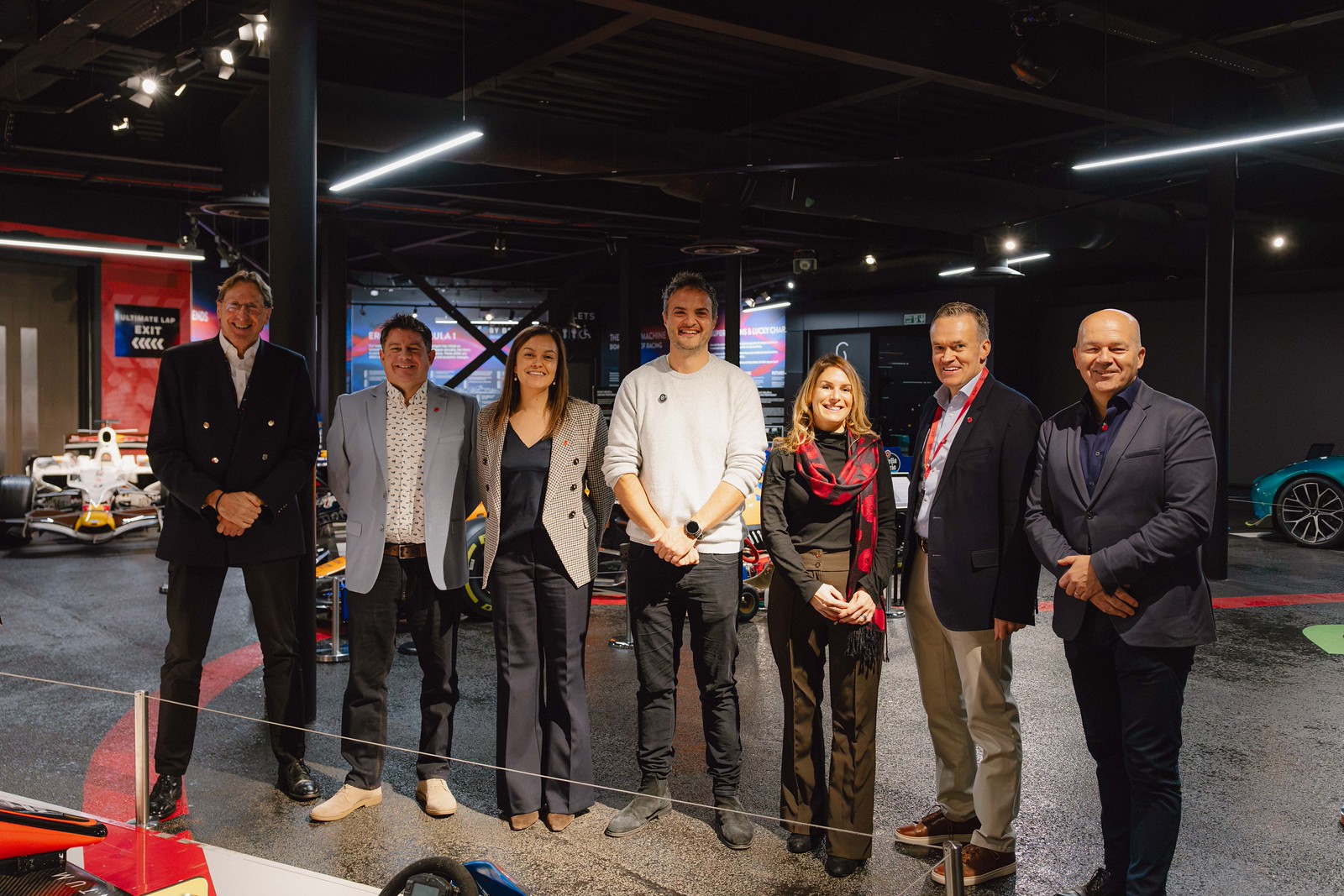
Corum Quarterly | Silverstone Museum | 10 November 2026
What can business leaders learn from the relentless pursuit of excellence in elite sport? At the latest Corum Quarterly, four experienced panellists explored the leadership, culture, preparation and mindset behind exceptional performance.
There are few more appropriate settings for a conversation about high performance than Silverstone Museum. Surrounded by the history, innovation and extraordinary achievements of British motorsport, Corum members and guests gathered for a fascinating discussion exploring what business can learn from elite sport.
 Hosted by Silverstone Museum and chaired by Richard Rosser, CEO of B4, the panel brought together four contrasting perspectives: Rob Jaina of Silverstone Museum, Sarah Jaycock of High Spec Composites, Dr Emma Georgiou, leadership coach, and Jack Brooks, former professional cricketer and coach.
Together, they explored what separates good performance from exceptional performance, how leaders create the right conditions for success and why some of the most valuable lessons come from the moments when things don’t go according to plan.
Talent Is Only the Beginning
One of the strongest themes was that exceptional performance requires far more than natural ability.
Jack Brooks reflected on his 16-year professional cricket career and the extraordinary dedication of players operating at the highest level. Talent might open doors, but the willingness to confront weaknesses, practise relentlessly and maintain high standards ultimately distinguishes the very best.
Emma Georgiou explored the responsibility of leaders to create environments where talented individuals can flourish. Recruiting exceptional people is only the beginning; leaders also need to ensure they feel able to ask for help, challenge ideas and understand how their contribution connects with the wider team’s performance.
 Sarah Jaycock offered a particularly memorable analogy involving a Formula 1 driver’s seat, prompting the audience to consider whether businesses should spend more time adapting their environments to their people rather than expecting everyone to fit predetermined roles.
The discussion highlighted an important distinction: high performance is not simply about finding the right people, but creating the right conditions for them to succeed.
Preparation, Marginal Gains and the Pursuit of Excellence
Few environments demonstrate the importance of preparation more clearly than elite sport.
Rob Jaina offered fascinating insights into the extraordinary work undertaken behind the scenes in motorsport, from the preparation required for race commentary to the meticulous planning and analysis that support Formula 1 teams.
He also shared an amusing example of how even the most sophisticated preparations can overlook something remarkably basic.
The concept of marginal gains featured prominently. Emma highlighted that performing well and having something to learn are not mutually exclusive. She encouraged leaders to ask what worked well, what took more effort than necessary and what could be improved next time. Sarah explained how seemingly minor adjustments in manufacturing can make a significant difference to performance.
Jack reinforced the importance of repetition, reflection and a willingness to keep improving, even when progress is measured in the smallest increments.
For business leaders, the message was clear: excellence is rarely achieved through one dramatic breakthrough. More often, it is the result of consistent attention to detail and an organisational commitment to getting better.
Leadership, Culture and Difficult Conversations
Some of the morning’s most engaging moments came from the panellists’ personal experiences.
 Jack shared stories from the Yorkshire cricket dressing room that illustrated the importance of accountability, honest conversations and strong relationships. His recollections prompted plenty of laughter but also raised serious questions about how organisations handle disagreements and setbacks.
Emma drew on her experience coaching senior leaders across Formula 1 organisations, to highlight the influence of leadership behaviour on team culture.
She described how a leader’s stated appreciation of different working styles was undermined by comments that valued some styles more than others. The example illustrated how everyday interactions can contradict the very message a leader intends to convey.
Sarah provided another memorable example from High Spec Composites, demonstrating how even the most enthusiastic employee can misunderstand organisational expectations when values are not clearly explained.
The discussion reinforced the importance of trust, clarity and consistent leadership. High-performing environments are not necessarily comfortable, but people must feel able to contribute, challenge and learn without undermining their relationships with colleagues.
Pressure, Resilience and Recovery
Elite sport operates under extraordinary pressure, often with very little room for error.
But how much pressure is productive, and when does it become counterproductive?
 Emma challenged the assumption that resilience is simply about withstanding ever-increasing demands. Recovery, reflection and the opportunity to reset are equally important components of sustainable performance. Emma also encouraged leaders to notice how their own behaviour changes under pressure, whether they withdraw, take over or become more controlling, and how this affects the team. She highlighted that acknowledging uncertainty does not prevent a leader from providing direction: being honest about what is not yet known can sit alongside clarity about priorities and the next steps.
Rob and Sarah explored the intense demands placed on Formula 1 teams and their suppliers, while Jack reflected on the psychological challenges of professional cricket, where setbacks are inevitable and confidence can be fragile.
Contributions from the audience added another dimension, particularly around how businesses operating continuously can create opportunities for reflection and renewal.
The conversation raised an important question for leaders: are we genuinely building resilient organisations, or simply expecting our people to absorb more pressure?
Innovation, Technology and Taking Risks
The discussion also explored how technology is changing the competitive landscape.
 Rob described the increasingly sophisticated use of data and predictive analysis in motorsport, while Jack highlighted advances in performance monitoring within cricket.
Sarah considered the implications of artificial intelligence making specialist knowledge more widely accessible, challenging businesses to think carefully about where their future competitive advantage will come from.
An audience question prompted a particularly interesting exchange about the relationship between marginal gains and genuine innovation. If everyone is focused on incremental improvement, where does the courage to do something fundamentally different come from?
The panellists agreed that progress requires both discipline and a willingness to challenge conventional thinking.
Breaking Through the Barriers
Richard concluded the discussion by reflecting on Sir Roger Bannister’s historic achievement in breaking the four-minute mile in 1954. What had once seemed beyond human capability suddenly became possible, challenging the assumptions of athletes around the world. The panellists were asked what business leaders could learn from that moment.
Their responses touched on persistence, confidence, the willingness to take risks and the importance of surrounding ourselves with people who encourage us to see beyond perceived limitations.
It was a fitting conclusion to a conversation that had consistently returned to the relationship between mindset, leadership and performance.
 Better Conversations. Better Decisions. In Person.
What made this Corum Quarterly particularly valuable was not simply the experience of the panellists, but the openness of the conversation and the contributions from those around the room.
Questions from members and guests challenged assumptions, introduced different perspectives and connected the experiences of elite sport with the realities of running businesses.
There were memorable stories, moments of humour and plenty of practical insights. But perhaps the greatest value came from the opportunity to exchange ideas directly with people who have experienced high performance from very different perspectives.
That is what Corum is designed to encourage: meaningful conversations between senior leaders, opportunities to learn from one another and relationships that extend beyond the event itself.
 As a special follow-up, everyone who attended will receive an exclusive document featuring 24 Key Takeaways from the discussion, capturing the principal insights and practical lessons to share with their teams.
Our thanks go to Phil Lawrie and the team at Silverstone Museum for their excellent hospitality, to Rob Jaina, Sarah Jaycock, Dr Emma Georgiou and Jack Brooks for their outstanding contributions, and to everyone who joined us and helped make the discussion so engaging.
We look forward to welcoming members and guests to future Corum events, where the conversations continue.
Corum. Better conversations. Better decisions. In person.
OUR PANEL
Rob Jaina | Silverstone Museum
Motorsport insider and museum leader. Rob has marshalled since the late 1990s, served as a British Grand Prix pitlane/start-line incident officer, and works with motorsport teams and collections internationally. His experience spans the operational realities of racing, heritage and engaging the next generation.
Sarah Jaycock | Co-founder and Executive Director, High Spec Composites
Sarah has spent 16 years building and developing a successful manufacturing business that has become a key supplier to several leading Formula 1 teams and elite sport. Her experience spans business growth, high-performance customer relationships and developing the skilled workforce needed to deliver at the highest level. She is also passionate about championing careers in engineering and manufacturing, creating opportunities and nurturing the next generation of talent.
Dr Emma Georgiou | Executive coach and leadership development consultant
Emma works with leaders and teams across motorsport and other complex organisations. Her Formula 1 experience includes work with leaders at Red Bull Racing and Haas F1 Team. She brings a practical perspective on how leadership behaviour, communication and trust shape performance under pressure, helping leaders maintain high standards while creating the conditions for people to do their best work.
Jack Brooks | Former professional cricketer, coach and mentor
Former county cricketer with more than 650 professional wickets across formats, England Lions experience and a 15-year professional playing career. Now coaches and mentors players, with firsthand insight into preparation, setbacks, dressing-room culture and resilience.
About our host
Phil Lawrie, CEO, Silverstone Museum
Phil Lawrie is CEO of Silverstone Museum and a Trustee of Silverstone Heritage Limited, joining the organisation in July 2023. An experienced international business leader, Phil oversees the Museum’s strategy, development, sustainability and operations. Prior to joining Silverstone, he spent 13 years with Qatar Museums, including as Chief Commercial Officer, and has held senior positions with globally recognised organisations including Al Jazeera Media Network, Turner Broadcasting System and American Express. Today, Phil leads Silverstone Museum as it continues to celebrate and preserve the remarkable heritage of British motor racing, while inspiring future generations through education, innovation and engaging visitor experiences.
About Silverstone Museum
Step into the heart of British motor racing at Silverstone Museum, located at the iconic Silverstone Circuit in Northamptonshire, UK. Explore immersive exhibits, legendary cars, and the stories of racing heroes that shaped history. Whether you’re a motorsport fan or curious about British heritage, the Silverstone Museum promises an unforgettable, high-speed adventure!